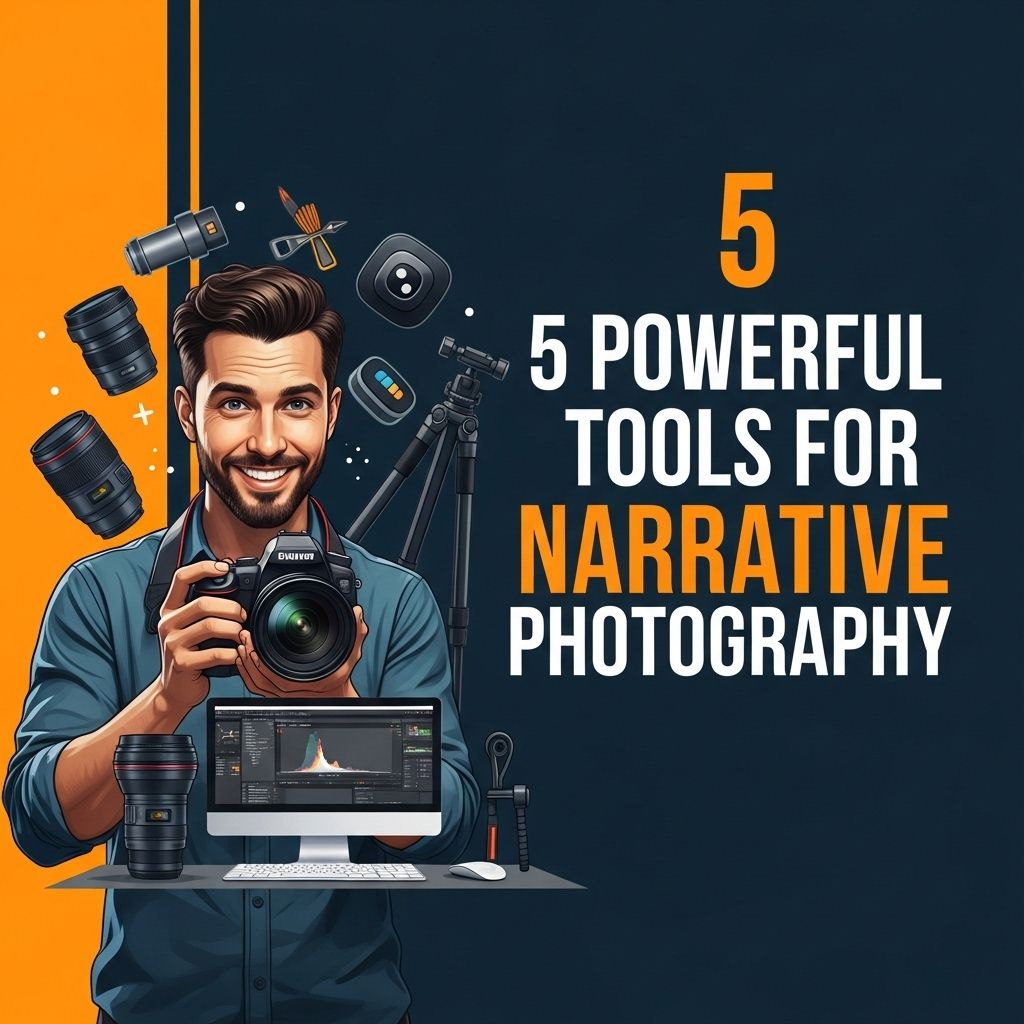
5 Powerful Tools for Narrative Photography
Discover 5 essential tools that can enhance your narrative photography skills and help you tell compelling visual stories.

Narrative photography is a compelling form of visual storytelling that transcends mere documentation of moments. It transforms everyday scenes into profound narratives that resonate with viewers on various levels. For photographers keen on exploring this art, several tools can significantly enhance their ability to create impactful images. In this article, we will delve into five powerful tools that can elevate narrative photography, providing insights on their features and how they contribute to storytelling through visuals.
Narrative photography captures stories and emotions through the lens, allowing viewers to connect with images on a deeper level. By utilizing powerful tools such as composition, lighting, perspective, subject choice, and post-processing, photographers can enhance their narratives and evoke a stronger reaction. For those looking to elevate their branding, explore our logo mockup collection to find inspiration.
Table of Contents
The Power of Composition
To tell a story through photography, the composition is critical. It involves arranging visual elements in a way that guides the viewer’s eye and conveys a message. Here are some essential compositional techniques:
- Rule of Thirds: Dividing the frame into thirds, both horizontally and vertically, creates focal points that enhance storytelling.
- Leading Lines: Utilizing natural lines within a scene can direct attention and create depth.
- Framing: Using elements within the scene to frame the subject can draw viewers’ interest.
Software Tools for Composition
Several software applications can assist photographers in planning and composing their shots:
- Adobe Photoshop: A powerful editing tool that allows for extensive manipulation of images, helping enhance compositional elements post-shoot.
- Capture One: Known for its tethering capabilities, it allows photographers to see their compositions in real-time during shoots.
Lighting Techniques
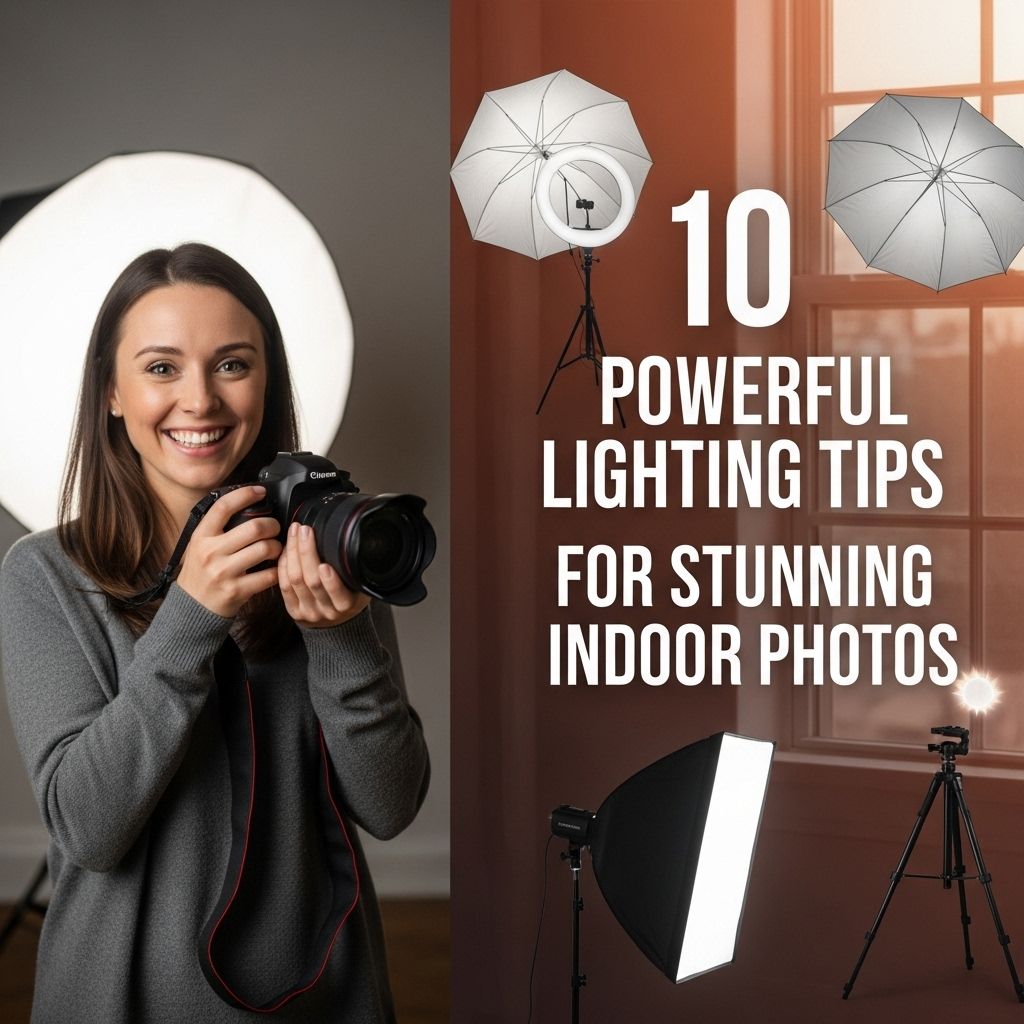
The way light interacts with a scene plays a crucial role in narrative photography. Different lighting setups can evoke various moods and feelings. Here’s how lighting can affect your images:
Natural vs. Artificial Light
Both types of lighting can create distinct atmospheres:
| Lighting Type | Characteristics | Best Used For |
|---|---|---|
| Natural Light | Soft, diffused, and varied | Outdoor scenes, portraits |
| Artificial Light | Control over intensity, color temperature | Studio shots, low-light conditions |
Light Modifiers
Using tools to modify light can dramatically change the outcome of your photograph:
- Softboxes: Diffuse light to reduce harsh shadows.
- Reflectors: Bounce light back onto the subject to fill in shadows.
- Gels: Alter the color of the light for creative effects.
Storytelling Through Editing
Post-processing is an integral part of narrative photography. It allows you to refine your images, enhancing their storytelling potential. Here are some popular tools for editing:
- Adobe Lightroom: Ideal for batch processing, organization, and making global adjustments without sacrificing image quality.
- Luminar AI: A user-friendly tool that utilizes artificial intelligence to enhance photos quickly.
When editing, consider the following techniques:
- Color Grading: Adjust colors to reflect the mood or theme of your narrative.
- Cropping: Remove distractions to focus on the story.
- Dodging and Burning: Highlight key areas and add depth.
The Importance of Captioning
Often overlooked, captions can significantly enhance the narrative aspect of photography. Captions provide context and insight, allowing viewers to engage more deeply with the image. Here are some tips for effective captioning:
Best Practices for Captions
- Be concise: Keep captions informative but brief.
- Provide context: Explain the scene or the emotions behind it.
- Encourage reflection: Ask questions or provoke thoughts to engage the viewer.
Community and Feedback
Engaging with a community of photographers can be invaluable. Sharing your work with others allows for feedback, inspiration, and collaboration. Here are some platforms to consider:
- Instagram: A visual-centric platform ideal for showcasing narrative photography.
- 500px: A photography community where you can share your work and receive critiques.
- Flickr: A platform that supports high-resolution images and allows for community interaction.
Getting Feedback
When seeking feedback, consider these strategies:
- Join photography groups online or locally.
- Participate in critique sessions.
- Ask specific questions about particular elements of your work.
Conclusion
Narrative photography is a powerful medium for storytelling, and harnessing the right tools can significantly enhance your ability to convey messages through images. From composition and lighting to editing and community engagement, each element plays a vital role in the creative process. By exploring and utilizing these powerful tools, photographers can elevate their narrative photography, making their visuals not just images, but stories that resonate.
FAQ
What is narrative photography?
Narrative photography is a style of photography that tells a story or conveys a message through visual imagery.
What are the key elements of narrative photography?
Key elements include composition, subject matter, context, and the emotional impact of the image.
Which tools are essential for narrative photography?
Essential tools include a quality camera, versatile lenses, a tripod for stability, post-processing software, and storytelling techniques.
How can I enhance my narrative photography skills?
Enhance your skills by studying storytelling techniques, practicing composition, and analyzing the work of renowned narrative photographers.
What role does post-processing play in narrative photography?
Post-processing allows photographers to enhance images, create mood, and emphasize storytelling elements through editing techniques.
Can narrative photography be effective in digital storytelling?
Yes, narrative photography is highly effective in digital storytelling as it engages viewers emotionally and visually, making the story more impactful.