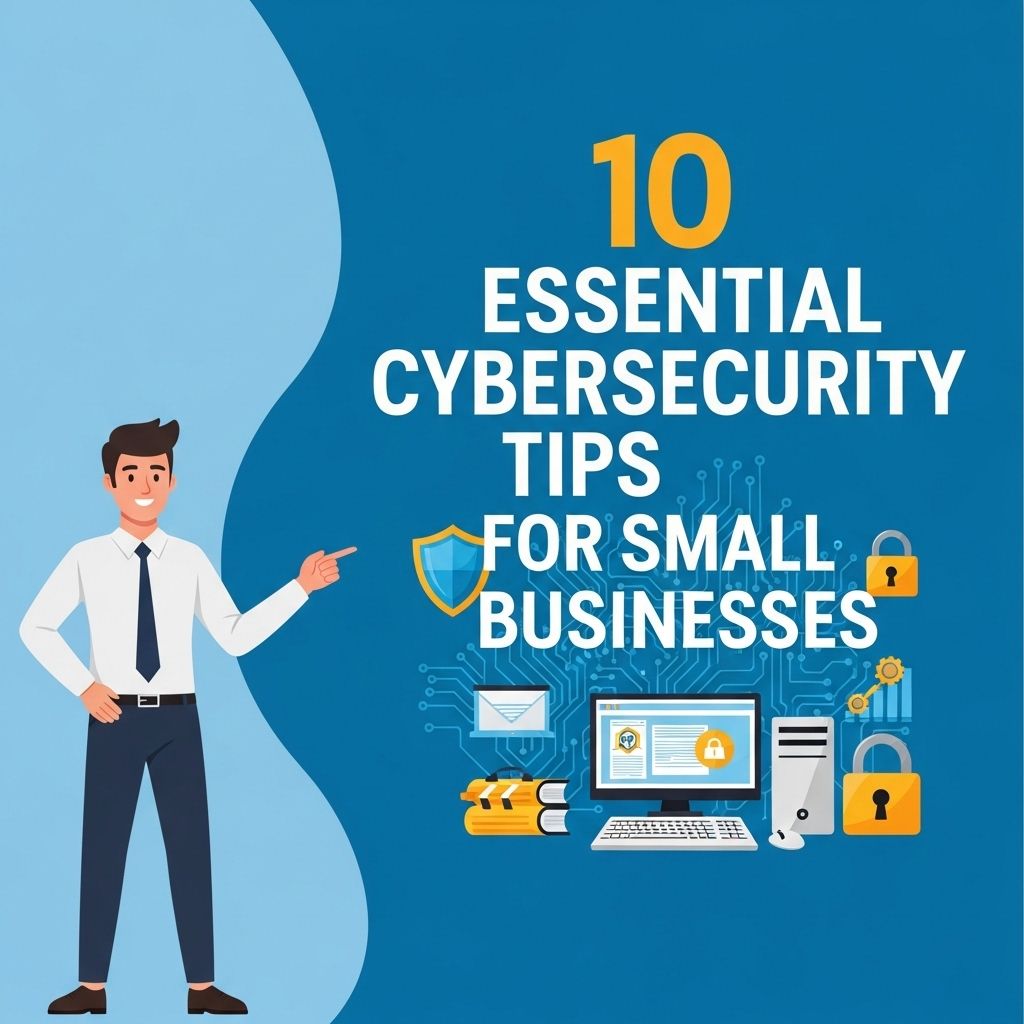
10 Essential Cybersecurity Tips for Small Businesses
Discover 10 vital cybersecurity tips to help small businesses protect their data and enhance security measures effectively.

In today’s digital age, small businesses are increasingly becoming targets for cybercriminals. With limited resources and knowledge, many small companies fall prey to attacks that compromise their data and finances. Understanding the prevalent cybersecurity threats and implementing effective measures can significantly reduce the risk of falling victim to cyberattacks. Here are essential cybersecurity tips tailored for small businesses that aim to bolster their defenses.
In today’s digitally driven environment, small businesses face unique cybersecurity threats that can jeopardize their operations and client trust. Implementing effective cybersecurity measures is essential for safeguarding sensitive information and ensuring business continuity. By following these ten essential cybersecurity tips, your business can significantly reduce its vulnerability to attacks. For those interested in enhancing their brand’s visibility, view the latest logo mockup designs that can help elevate your company’s image.
Table of Contents
1. Conduct Regular Security Assessments
Understanding your vulnerabilities is the first step in strengthening your cybersecurity posture. Regular security assessments help identify weaknesses in your systems and processes. Consider the following:
- Perform penetration testing to simulate attacks.
- Review access controls and user permissions.
- Evaluate software and hardware components for outdated versions.
2. Utilize Strong Password Policies
Weak passwords are one of the easiest ways for cybercriminals to gain access to sensitive information. To create a robust password policy, encourage the following:
- Use passwords with at least 12 characters, including letters, numbers, and symbols.
- Implement two-factor authentication (2FA) for added security.
- Regularly update passwords and encourage employees to do the same.
3. Educate Employees About Cybersecurity
Humans are often the weakest link in the security chain. Regular training and education can empower your staff to recognize and respond to potential threats. Consider implementing:
- Regular cybersecurity awareness workshops.
- Update training materials to include the latest threats.
- Phishing simulation exercises to test employees.
4. Secure Your Network
Your business’s network is a prime target for attackers. To secure your network, follow these guidelines:
- Change the default passwords on routers and networking equipment.
- Enable firewalls and regularly update them.
- Implement Virtual Private Networks (VPNs) for remote work access.
5. Back Up Data Regularly
Data loss can occur due to various reasons, including cyberattacks, natural disasters, and hardware failures. Regular backups can mitigate these risks. Here’s how to establish a robust backup routine:
- Schedule automatic backups daily or weekly.
- Store backups in multiple locations (e.g., on-site and cloud).
- Test backups regularly to ensure data recovery processes work effectively.
6. Keep Software Up to Date
Outdated software can have vulnerabilities that cybercriminals can exploit. To minimize risks:
- Enable automatic updates for all software, including operating systems and applications.
- Regularly check for updates on devices and software used by employees.
- Uninstall unused applications to reduce attack surfaces.
7. Implement Access Control Measures
Not everyone in your organization needs access to sensitive information. Implementing strict access control can reduce the risk of data breaches:
- Enforce the principle of least privilege (PoLP).
- Regularly review user access levels.
- Disable access for former employees immediately.
8. Monitor and Respond to Threats
Continuous monitoring of your systems is crucial for detecting and responding to threats promptly. Consider these strategies:
- Utilize Security Information and Event Management (SIEM) tools.
- Establish an incident response plan that outlines steps to take when a breach occurs.
- Keep logs of network activity for further analysis.
9. Secure Physical Access
Cybersecurity isn’t just about digital protection; physical security is equally important. To safeguard physical access to sensitive areas:
- Implement card access systems for sensitive areas.
- Use surveillance cameras to monitor activity.
- Conduct regular security audits of physical assets.
10. Work with Cybersecurity Professionals
If your team lacks the expertise to manage cybersecurity effectively, consider bringing in external professionals. Here’s how they can help:
- Conduct comprehensive security assessments.
- Provide ongoing training and education for your staff.
- Help develop and implement security policies tailored to your business needs.
Conclusion
In an era where cyber threats are ever-evolving, small businesses must prioritize cybersecurity. By implementing these essential tips, you can create a safer environment for your business, employees, and customers. Remember, cybersecurity is not a one-time task but an ongoing process that requires vigilance and adaptation to new threats.
FAQ
What are the top cybersecurity tips for small businesses?
Some essential cybersecurity tips include using strong passwords, implementing two-factor authentication, regularly updating software, training employees on security best practices, and backing up data.
How can small businesses protect sensitive data?
Small businesses can protect sensitive data by encrypting it, restricting access to authorized personnel, and regularly monitoring data access logs.
Why is employee training important for cybersecurity?
Employee training is crucial for cybersecurity as it helps staff recognize phishing attempts and understand the importance of following security protocols to minimize risks.
What role does software updates play in cybersecurity?
Regular software updates are vital for cybersecurity as they patch vulnerabilities that could be exploited by cybercriminals, ensuring your systems are secure.
How can small businesses ensure their networks are secure?
Small businesses can ensure network security by using firewalls, securing Wi-Fi networks with strong passwords, and regularly monitoring network traffic for unusual activity.
What should small businesses do if they experience a cyber attack?
In the event of a cyber attack, small businesses should immediately contain the breach, assess the damage, notify affected parties, and report the incident to relevant authorities.