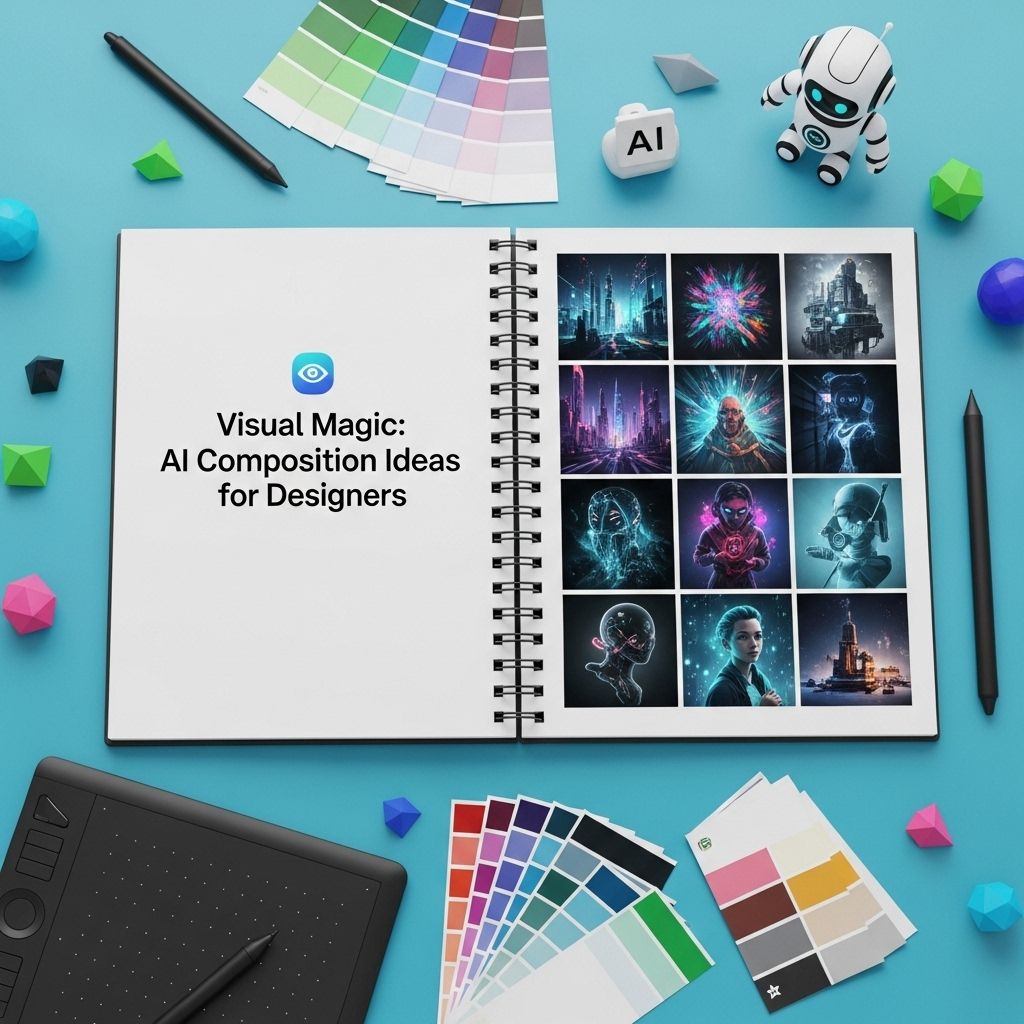
Visual Magic: AI Composition Ideas for Designers
Explore innovative AI composition ideas that empower designers to create stunning visuals effortlessly and enhance their creative process.

In an age where technology and creativity intertwine, artificial intelligence (AI) has emerged as a transformative tool for designers. Harnessing the power of AI can unlock new avenues of creativity, allowing designers to explore compositions and concepts previously unimagined. From automating mundane tasks to generating stunning visuals, AI is reshaping the design landscape. This article delves into inspiring AI composition ideas that can elevate your design projects.
Visual magic comes alive in the world of design through AI composition ideas that elevate creativity and efficiency. Designers can explore innovative possibilities, particularly in 3D logo mockups that bring concepts to life in stunning ways. To get inspired, check out our 3D mockup collection.
Table of Contents
Understanding AI in Design
Before diving into specific applications, it’s crucial to understand how AI integrates into the design process. AI algorithms can analyze vast amounts of data, predict trends, and even mimic human creativity. Here are some of the key roles AI plays in design:
- Automated Design Generation: Tools like Adobe’s Sensei use machine learning to generate designs based on user preferences.
- Image Recognition: AI can identify elements within images, aiding in the creation of mood boards and design inspiration.
- Personalization: AI systems can analyze user behavior to customize designs, making them more relevant.
With these capabilities, designers can focus more on the creative aspects of their work.
AI-Powered Tools for Designers
Several AI-driven tools have revolutionized how designers approach their projects. Here’s a list of the most popular ones:
| Tool | Description | Best For |
|---|---|---|
| Canva | A user-friendly graphic design tool that uses AI to suggest layouts and color schemes. | Social media graphics |
| Adobe Illustrator | Incorporates AI features for smart artwork and pattern generation. | Vector graphics |
| Daz 3D | AI-powered graphics software for creating 3D models and animations. | 3D design |
| DeepArt | Transforms images into artwork using neural networks. | Artistic illustrations |
| Runway ML | A creative suite for video editing that leverages AI for effects and enhancements. | Video projects |
Innovative Composition Ideas Using AI
Now that we’ve established the tools available, let’s explore innovative composition ideas that leverage AI technology. These concepts can help designers push boundaries and create unique visuals.
1. Generative Art
Generative art involves using algorithms to create artwork. By harnessing AI, designers can develop pieces that evolve over time or react to user inputs. Here’s how to get started:
- Choose a generative art tool like Processing or P5.js.
- Experiment with different algorithms to create visual patterns.
- Incorporate randomness to give each piece a unique flair.
2. AI-Enhanced Photography
AI tools can enhance photographic compositions by automatically adjusting elements such as lighting, contrast, and saturation. Consider these techniques:
- Use AI software like Luminar or Skylum to edit photos more efficiently.
- Utilize AI for background removal, focusing on composition layering.
- Implement style transfer techniques to blend photos with artistic styles.
3. Collaborative Design with AI
Collaboration between AI and human designers can yield unexpected results. Try these approaches:
- Work with AI platforms that provide design suggestions based on your initial ideas.
- Engage in brainstorming sessions where AI generates multiple concepts for a given theme.
- Incorporate feedback loops where AI learns from your design preferences to tailor future suggestions.
The Future of AI in Design
As AI technology continues to advance, its potential application in design will only grow. Here are a few predictions for the future:
- Hyper-Personalization: AI will be able to create designs tailored to individual user preferences in real-time.
- Full Automation: Routine design tasks will be fully automated, allowing designers to focus on strategic thinking.
- Enhanced Collaboration: AI will serve as a collaborative partner, generating ideas and suggestions based on trends and user interactions.
Challenges and Considerations
While AI presents numerous opportunities, it also poses challenges. Designers must navigate issues such as:
- Intellectual Property: Determining ownership of AI-generated designs can be complex.
- Quality Control: AI may produce designs that require human refinement to meet industry standards.
- Ethical Implications: Designers must consider the ethical aspects of using AI in their work.
Conclusion
AI is revolutionizing the way designers approach their craft, providing tools and inspiration that can lead to groundbreaking compositions. By integrating AI into their workflows, designers can not only enhance their productivity but also explore innovative ideas that push the boundaries of creativity. As the technology continues to evolve, it is essential for designers to stay informed and adaptable, embracing the magic of AI while navigating its challenges. The future of design is bright, and those who harness the power of AI will undoubtedly lead the way.
FAQ
What is Visual Magic in AI design?
Visual Magic in AI design refers to the innovative use of artificial intelligence tools to create stunning visual compositions that enhance the design process.
How can AI enhance my design compositions?
AI can analyze design trends, suggest color palettes, and generate unique layouts, making it easier for designers to create visually appealing compositions.
What tools can I use for AI composition in design?
Popular tools for AI composition include Adobe Sensei, Canva’s Magic Resize, and RunwayML, which offer features to automate and enhance design tasks.
Can AI-generated designs be used commercially?
Yes, AI-generated designs can be used commercially, but it’s important to check the licensing agreements of the AI tools you are using.
How do I integrate AI into my design workflow?
You can integrate AI into your design workflow by using AI design tools for brainstorming, generating prototypes, and automating repetitive tasks.
What are the benefits of using AI in design?
The benefits of using AI in design include increased efficiency, inspiration through trend analysis, and the ability to generate creative concepts quickly.