Top 5 Commercial Automation Tools for 2025
Discover the top 5 commercial automation tools of 2025 that will streamline your business operations and enhance productivity.
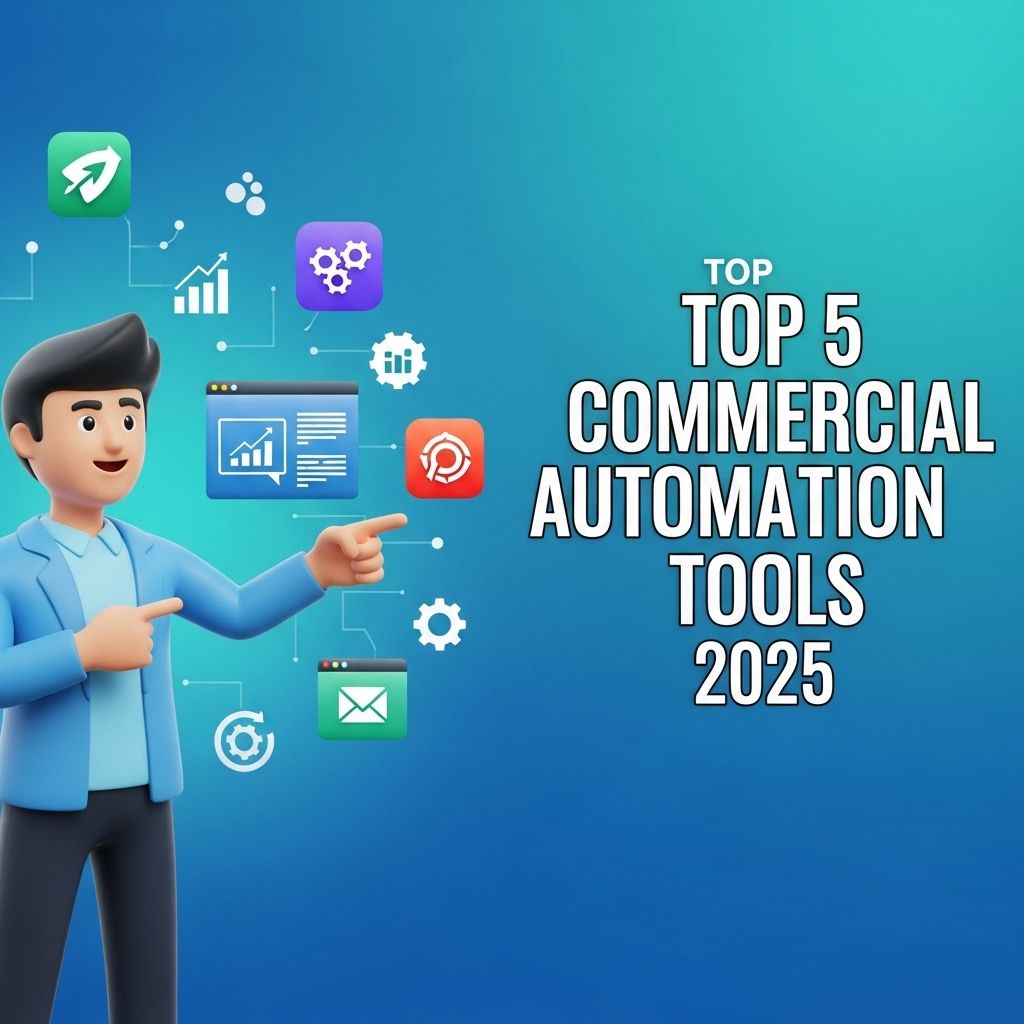
In today’s fast-paced business environment, commercial automation tools have become indispensable for enhancing productivity, reducing operational costs, and streamlining processes. As we look towards 2025, several tools stand out for their innovative features and robust performance. This article delves into the top five commercial automation tools that are set to redefine how businesses operate in the years to come.
As businesses increasingly prioritize efficiency and innovation, the landscape of commercial automation tools is evolving rapidly. In 2025, knowing the top tools can help streamline operations and enhance productivity. For those looking to elevate their branding, you can discover unique logo mockup ideas that reflect the latest design trends.
Understanding Commercial Automation
Commercial automation refers to the use of technology to perform tasks with minimal human intervention. This can include anything from software applications that handle customer relationship management (CRM) to automated financial reporting systems. The ultimate goal is to improve efficiency and accuracy across various business functions.
Key Benefits of Automation Tools
- Increased Efficiency: Automating repetitive tasks frees up employees to focus on strategic initiatives.
- Cost Savings: Reduced labor costs and fewer human errors translate to significant savings.
- Enhanced Accuracy: Automation minimizes the risk of errors that can occur in manual processes.
- Scalability: Automation tools can easily scale with your business as it grows.
1. Zapier
Zapier serves as a bridge between various apps, allowing users to create automated workflows without any coding knowledge. It connects over 3,000 applications, enabling seamless data transfer and task automation.
Key Features:
- Easy-to-use interface
- Multi-step Zaps for complex workflows
- Customizable triggers and actions
Use Cases:
- Automatically adding email subscribers to a mailing list.
- Syncing data between CRM and marketing tools.
- Updating project management tools with form submissions.
2. HubSpot
HubSpot is well-known for its comprehensive marketing, sales, and service software. Its automation features help businesses manage leads, run marketing campaigns, and enhance customer engagement.
Key Features:
- Email marketing automation
- Lead scoring and nurturing
- Customer feedback and surveys
Benefits:
| Feature | Benefit |
|---|---|
| Integration with CRM | Provides a unified view of customer interactions |
| Analytics dashboard | Tracks performance and ROI of campaigns |
3. Monday.com
Monday.com is a work operating system that offers automation capabilities to enhance team collaboration and project management. Users can customize workflows and automate repetitive tasks.
Key Features:
- Customizable dashboards
- Visual project tracking
- Integration with popular tools like Slack and Google Drive
Best Use Cases:
- Project status updates sent to team members automatically.
- Task assignments based on workload.
- Time tracking for productivity analysis.
4. Salesforce Automation
Salesforce is a leading CRM platform that includes powerful automation features focused on sales processes. It helps sales teams manage leads, opportunities, and customer interactions more effectively.
Key Features:
- Lead and opportunity scoring
- Automated follow-up tasks
- Custom reports and dashboards
Impact on Sales Teams:
| Feature | Impact |
|---|---|
| Automation of repetitive tasks | Allows teams to focus on closing deals |
| Real-time analytics | Informs strategy adjustments and optimizations |
5. Microsoft Power Automate
Microsoft Power Automate (formerly known as Microsoft Flow) is a cloud-based service that allows users to create automated workflows between different applications. It integrates seamlessly with the Microsoft ecosystem as well as third-party applications.
Key Features:
- Wide range of connectors
- Templates for common scenarios
- AI Builder for advanced automation
Common Applications:
- Automating approvals for documents and requests.
- Sending alerts based on data changes.
- Integrating disparate applications in a unified workflow.
The Future of Commercial Automation
As we move towards 2025, the landscape of commercial automation will continue to evolve. Advancements in artificial intelligence, machine learning, and robotics will play a significant role in shaping the tools available to businesses. Here are a few trends to watch:
Emerging Trends:
- Increased use of AI for predictive analytics and decision-making.
- More integrations between automation tools and artificial intelligence.
- Focus on user experience and intuitive design to facilitate adoption.
Conclusion
Choosing the right commercial automation tools can significantly impact your business’s efficiency and effectiveness. The tools highlighted in this article are at the forefront of automation technology and offer unique features that cater to a variety of business needs. As technology continues to evolve, staying updated with these tools will empower businesses to maintain a competitive edge in their respective industries.
FAQ
What are the top commercial automation tools for 2025?
The top commercial automation tools for 2025 include platforms like Zapier, HubSpot, Salesforce, Monday.com, and Integromat, which enhance efficiency and streamline workflows.
How can automation tools benefit businesses in 2025?
Automation tools can benefit businesses in 2025 by reducing operational costs, improving accuracy, increasing productivity, and allowing teams to focus on strategic tasks instead of repetitive ones.
What features should I look for in commercial automation tools?
When selecting commercial automation tools, look for features such as ease of integration, scalability, user-friendly interfaces, comprehensive reporting, and customization options.
Are there any industry-specific automation tools for 2025?
Yes, there are industry-specific automation tools available in 2025, such as marketing automation tools for digital marketing, CRM solutions for sales teams, and inventory management systems for retail.
How do I choose the right automation tool for my business?
To choose the right automation tool for your business, assess your specific needs, evaluate different tools’ features and pricing, consider user feedback, and ensure scalability for future growth.