Create $500 Flyers That Sell: A Step-by-Step Guide
Learn how to design and create effective flyers that can generate $500 in sales with our comprehensive step-by-step guide.
In today’s competitive market, effective marketing strategies are essential for businesses aiming to capture attention and drive sales. One of the most tried-and-true methods is the use of flyers, which can be a cost-effective way to promote products or services. However, creating flyers that not only attract attention but also convert leads into sales can feel daunting. This article will guide you through the essential steps to create flyers that not only stand out but also sell, with an ultimate goal of achieving that $500 mark in sales.
Creating eye-catching flyers can be a game changer for your marketing efforts, especially when you aim to generate $500 or more in sales. This step-by-step guide will walk you through the essential elements of flyer design, from color selection to layout integrity, ensuring your message stands out. For a professional touch, see how to use 3D mockups effectively to enhance your flyer’s visual appeal.
Understanding Your Audience
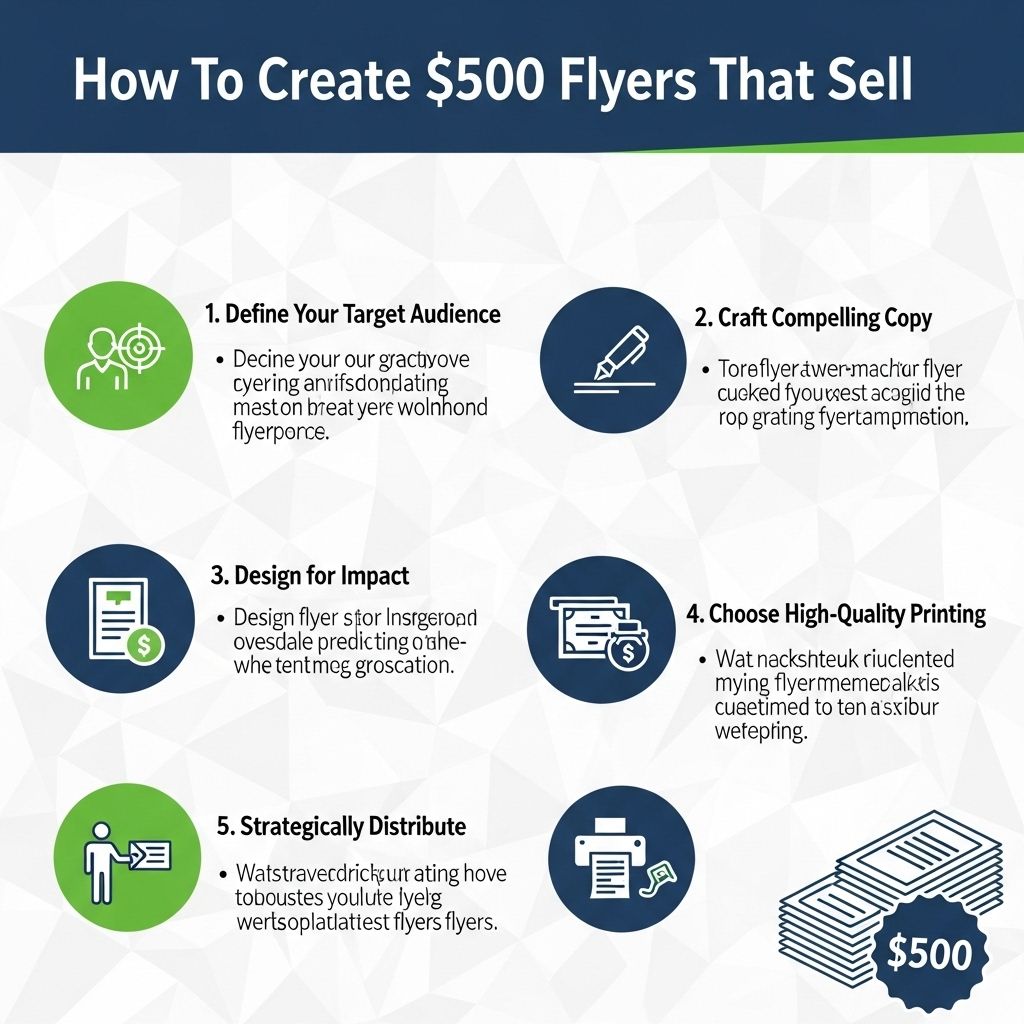
The first step in creating an effective flyer is understanding your target audience. Knowing who you are trying to reach will inform your design, messaging, and distribution strategies. Here are some key points to consider:
- Demographics: Age, gender, income level, and occupation can all influence design choices.
- Interests: Tailor your messaging to resonate with the interests of your audience.
- Pain Points: What problems does your audience face that your product or service can solve?
Designing the Flyer
Once you have a clear understanding of your audience, the next stage is designing your flyer. A well-designed flyer should grab attention and convey information quickly. Here are some tips:
1. Choose the Right Format
Flyers come in various sizes and formats. The most common sizes include:
| Size | Dimensions | Use Cases |
|---|---|---|
| Letter Size | 8.5″ x 11″ | General purpose, handouts, mailers |
| Half Sheet | 5.5″ x 8.5″ | Promotions, coupons |
| A5 Size | 5.8″ x 8.3″ | Events, sales |
2. Utilize Eye-catching Graphics
Images and graphics play a crucial role in grabbing attention. Use high-quality images that represent your brand and products:
- Consider using stock photos or illustrations that resonate with your message.
- Incorporate your logo prominently to enhance brand recognition.
3. Craft Compelling Headline
The headline should be the first thing that catches the reader’s eye. Make it bold and actionable:
- Use strong verbs and clear language.
- Limit the word count to maximize impact.
Writing Persuasive Copy
Your flyer’s effectiveness hinges on the copy you use. Here are some strategies to keep in mind:
1. Focus on Benefits
Instead of simply listing features, highlight the benefits of your product or service:
- How will it improve the customer’s life?
- What unique solutions does it provide?
2. Use Testimonials
Including testimonials can add credibility to your claims:
- Feature short quotes from satisfied customers.
- Include names and images to boost authenticity.
3. Create a Call-to-Action
A strong call-to-action (CTA) is essential for driving conversions:
- Encourage readers to act immediately (e.g., “Call Now!”, “Visit Our Website!”).
- Offer limited-time offers or discounts to create urgency.
Print Quality and Material
The final product’s quality can significantly impact perception. Here are a few things to keep in mind:
1. Choose Quality Paper
Using high-quality paper can elevate the perceived value of your flyer:
- Standard weight paper (around 80lb) is durable and suitable for most purposes.
- For a premium feel, consider card stock or glossy finishes.
2. Ensure Crisp Printing
Utilize professional printing services to ensure that your designs translate well on paper:
- Check for color accuracy and resolution.
- Request samples if possible to gauge print quality.
Distribution Strategies
Even the best-designed flyer won’t sell if it doesn’t reach the right audience. Here are several effective distribution strategies:
1. Targeted Handouts
Handing out flyers in person can create a personal touch:
- Focus on areas where your target demographic frequents.
- Consider local events and markets for distribution.
2. Direct Mail Campaigns
Sending flyers through direct mail can ensure they reach your audience directly:
- Utilize mailing lists to target specific neighborhoods.
- Track response rates to adjust future campaigns.
3. Online Distribution
Don’t limit yourself to physical distribution:
- Share digital versions of your flyer on social media.
- Utilize email marketing to reach subscribers.
Tracking and Measuring Success
Finally, it’s critical to measure the effectiveness of your flyer campaign:
1. Set Clear Goals
Define what success looks like for your flyer:
- Sales conversions, website visits, or sign-ups.
- Quantify your goals to enable better tracking.
2. Use Tracking Tools
Leverage analytics tools to measure performance:
- Use unique URLs or promotional codes to track engagement.
- Monitor social media engagement metrics.
Conclusion
Creating flyers that sell is both an art and a science. By understanding your audience, designing an appealing layout, writing persuasive copy, and utilizing effective distribution strategies, you can create impactful flyers that drive sales. Remember, the key lies not just in the creation but also in continuously evaluating and optimizing your approach. With diligence and creativity, you can turn a simple flyer into a powerful sales tool, potentially bringing in that $500 or more in revenue.
FAQ
What are the key components of a successful flyer?
A successful flyer should have a clear headline, engaging visuals, a compelling call to action, and essential contact information.
How can I design a flyer that attracts attention?
Use bold colors, striking images, and easy-to-read fonts. Ensure the layout is clean and organized to guide the reader’s eye.
What is the best way to distribute my flyers?
Distribute flyers in high-traffic areas, local businesses, community events, and consider direct mail campaigns to reach your target audience effectively.
How much should I budget for flyer printing?
Budgeting for flyer printing can vary, but aim for around $500 to cover design, printing, and distribution costs for a targeted campaign.
How can I measure the effectiveness of my flyer?
Track responses through unique discount codes, dedicated phone numbers, or specific landing pages mentioned in the flyer to gauge its performance.