10 Powerful Storytelling Structures You Need to Know
Discover 10 essential storytelling structures that can elevate your writing and captivate your audience. Learn how to weave compelling narratives.
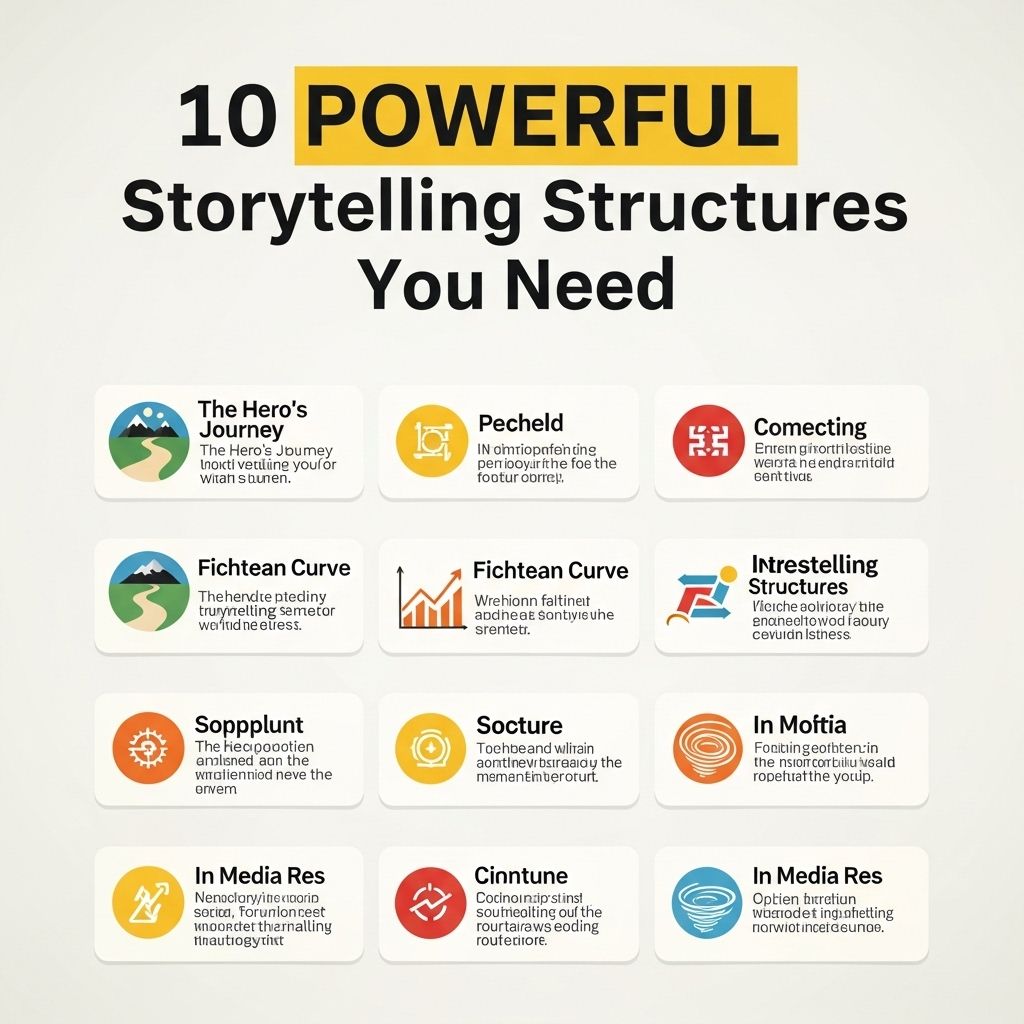
In an ever-evolving digital landscape, mastering the art of storytelling is crucial for anyone looking to engage an audience effectively. Whether you’re a marketer, a writer, or a content creator, understanding various storytelling structures can elevate your narratives and make them more impactful. This article delves into ten powerful storytelling structures that can enhance your storytelling prowess and help you connect authentically with your audience.
Storytelling is an essential skill that can captivate audiences and convey complex ideas effectively. Understanding different storytelling structures can enhance your narratives and make them more impactful. To visualize your creativity, consider exploring various tools to create stunning visuals, such as visualize your 3D logo concepts.
The Hero’s Journey
One of the most renowned storytelling frameworks is the Hero’s Journey, popularized by Joseph Campbell. This structure outlines a protagonist’s adventure, typically involving several key stages:
- The Ordinary World: The hero’s normal life before the adventure begins.
- The Call to Adventure: The hero receives a challenge or quest.
- The Refusal of the Call: Initial reluctance to embark on the journey.
- Meeting the Mentor: The hero encounters someone who provides guidance.
- Crisis: The hero faces a significant challenge that tests their resolve.
- The Return: The hero returns home transformed.
Application
This structure is not limited to epic tales; it can be applied to brand storytelling, where the brand acts as the hero overcoming challenges and evolving.
The Three-Act Structure
The three-act structure is a classic framework often used in screenwriting and literature. It consists of:
- Act One: Setup – Introduces characters, setting, and the main conflict.
- Act Two: Confrontation – The protagonist faces obstacles, leading to a climax.
- Act Three: Resolution – The conflict is resolved, and the story concludes.
Benefits
This format keeps narratives concise and engaging, perfect for various mediums, including presentations and essays.
The Mountain Structure
This structure resembles a mountain peak, representing the protagonist’s journey toward a climax. The key elements include:
- Exposition: Background information is provided.
- Rising Action: Events build tension and develop the conflict.
- Climax: The peak of the story where the main conflict reaches its highest intensity.
- Falling Action: Events following the climax lead to resolution.
- Denouement: The final outcome and resolution of subplots.
Usage
This structure is effective in creating suspense and anticipation, making it ideal for thrillers and dramatic narratives.
The Five-Act Structure
This structure expands on the three-act format, often used in classical plays:
- Exposition: Introduction of characters and setting.
- Rising Action: Development of the main plot.
- Climax: Turning point of the story.
- Falling Action: Consequences of the climax unfold.
- Resolution: Conclusion of the story.
Characteristics
It allows for deeper character development and complex subplots.
In Media Res
This technique begins the story in the midst of action, drawing readers in immediately. It often involves:
- Immediate Hook: Captures attention right away.
- Flashbacks: Background information is revealed through flashbacks.
Effective Use
This structure works well for narratives that aim to create immediate intrigue, such as in thrillers or action stories.
The Circular Structure
This narrative begins and ends in the same place, creating a sense of closure. Its elements include:
- Initial Setup: The story begins with a specific scenario.
- Journey: The protagonist undergoes a transformation.
- Return: The conclusion reflects the starting point, showcasing character growth.
Examples
Common in fables and parables, this structure emphasizes life lessons and moral outcomes.
Dual Narrative Structure
This structure weaves together two different storylines, often from different perspectives. Key attributes involve:
- Parallel Plots: Two storylines that may converge or contrast.
- Character Development: Each narrative provides insights into different characters.
Advantages
It allows for enriched storytelling, revealing how different experiences shape individual perspectives.
The Epistolary Structure
This format uses letters, diary entries, or other documents to tell a story. Main features include:
- Personal Voice: Offers intimate insights into characters.
- Time Passage: Can effectively show the progression of time and events.
Impact
This structure creates a more personal connection with readers, often leading to a deeper emotional impact.
Framed Narrative
A framed narrative involves a story within a story. Key components include:
- Outer Story: The primary narrative that provides context.
- Inner Story: A secondary narrative that enriches the overall theme.
Richness
This structure offers layers of meaning and can enhance character development and thematic depth.
Conclusion
Understanding these storytelling structures equips you with versatile tools to craft compelling narratives tailored to your audience. As you experiment with each framework, consider how they resonate with your unique voice and message. By integrating these powerful storytelling methods, you can create engaging content that captivates and inspires.
FAQ
What are the key elements of effective storytelling structures?
Effective storytelling structures typically include a clear beginning, middle, and end; character development; conflict and resolution; and a theme that resonates with the audience.
What is the ‘Three Act Structure’ in storytelling?
The ‘Three Act Structure’ divides a story into three parts: Setup, Confrontation, and Resolution, helping to create a compelling narrative arc that engages the audience.
How does the ‘Hero’s Journey’ template work in storytelling?
The ‘Hero’s Journey’ is a narrative framework that follows a hero who goes on an adventure, faces challenges, and ultimately returns transformed, illustrating personal growth and triumph.
What is the ‘Freytag’s Pyramid’ structure?
Freytag’s Pyramid is a five-part structure that includes Exposition, Rising Action, Climax, Falling Action, and Denouement, providing a clear pathway for plot development.
Can you explain the ‘In Media Res’ storytelling technique?
The ‘In Media Res’ technique starts the story in the midst of action, captivating the audience from the beginning and then filling in the backstory through flashbacks or dialogue.
What makes the ‘Circular Structure’ effective in storytelling?
The ‘Circular Structure’ brings a story back to its starting point, often highlighting character growth and thematic depth, creating a satisfying sense of closure for the audience.