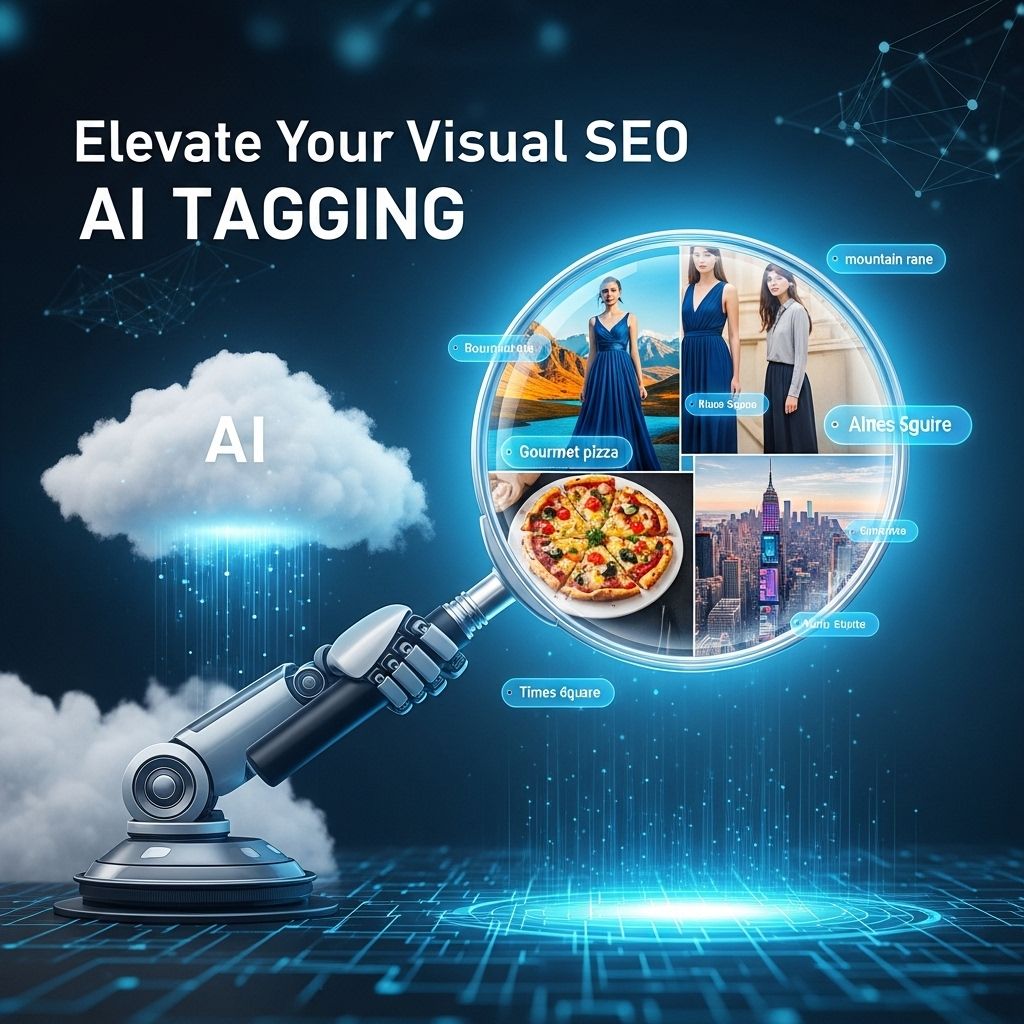
In today’s digital landscape, visual content plays a pivotal role in engaging audiences and enhancing user experience. As the Internet evolves, so do the methodologies for optimizing visual assets. With the advent of Artificial Intelligence (AI), new techniques have emerged to ensure that visual SEO is not just about alt texts and captions anymore. Businesses aiming for higher visibility must embrace AI tagging to elevate their visual SEO strategies significantly.
In the digital age, leveraging AI tagging can significantly enhance your visual SEO strategy, helping to optimize images and drive more traffic to your site. By automating the tagging process, you ensure that your visuals are easily discoverable. For an effective approach, see how to use 3D mockups effectively as part of your visual content strategy.
Table of Contents
The Significance of Visual Content
As humans are visual creatures, we are naturally drawn to images, infographics, and videos. They are essential not just for aesthetic appeal but also for:
- Enhancing User Engagement: Visuals can help capture interest more effectively than text alone.
- Improving Understanding: Complex data can often be simplified through visual representation.
- Boosting Shareability: Posts with images are more likely to be shared on social media platforms.
- SEO Benefits: Properly optimized visuals can significantly improve search rankings.
Understanding AI Tagging
AI tagging refers to the use of artificial intelligence technologies to automatically generate tags and descriptions for visual content. This process encompasses various AI-driven techniques, including:
Image Recognition
AI algorithms can analyze images to identify objects, scenes, and even emotions depicted within. This capability is invaluable for creating relevant tags that improve discoverability.
Natural Language Processing (NLP)
NLP techniques allow AI to generate contextual descriptions and meta information based on the visual content’s semantic understanding, making it easier for search engines to index images accurately.
Machine Learning
Machine learning models can learn from vast datasets, subsequently predicting the most effective tags and optimizing them based on performance analytics.
Benefits of AI Tagging for Visual SEO
Implementing AI tagging offers numerous advantages for visual SEO:
1. Enhanced Accuracy
AI can analyze images far more accurately than manual tagging, reducing human error and ensuring consistency across your visual content.
2. Scalability
As your visual library grows, AI tools can manage and tag extensive collections efficiently without a linear increase in workload.
3. Time Efficiency
Automating the tagging process allows teams to focus more on strategy and creativity rather than tedious manual tasks.
4. Improved Discoverability
With precise and relevant tags, your visuals have a better chance of appearing in search results, significantly boosting organic traffic.
Best Practices for Implementing AI Tagging
To maximize the benefits of AI tagging for visual SEO, consider the following best practices:
1. Choose the Right AI Tools
Numerous AI tools are available, offering various functionalities. Here are a few to consider:
| Tool | Description |
|---|---|
| Google Cloud Vision | Provides powerful image analysis and tagging capabilities. |
| Amazon Rekognition | Offers facial analysis and object detection for tagging images. |
| Clarifai | A versatile AI tool that can be trained to recognize custom tags. |
2. Fine-tune AI Models
Customize AI tagging tools by training them with your specific dataset to improve the accuracy and relevance of the generated tags.
3. Regularly Analyze Tag Performance
Monitor the performance of your visual content using analytics tools to determine which tags are driving traffic. This ongoing analysis will inform future tagging strategies.
4. Combine AI with Human Oversight
While AI can automate much of the tagging process, human oversight ensures that the tags are contextually appropriate and aligned with your brand’s voice.
Measuring the Impact of AI Tagging on Visual SEO
To assess the effectiveness of AI tagging on your visual SEO efforts, focus on key performance indicators (KPIs) such as:
- Organic Traffic: Monitor increases in traffic from image search results.
- Engagement Rates: Assess how users interact with visual content (likes, shares, comments).
- Conversion Rates: Track whether users convert after engaging with visual content.
- Search Ranking: Evaluate if your visuals rank higher in search engine results pages (SERPs).
Future Trends in Visual SEO with AI
The realm of visual SEO is continually evolving. Here are some anticipated trends to watch:
1. Greater Emphasis on Video Content
As video continues to dominate online engagement, AI tagging will become crucial for optimizing video content, ensuring it’s easily searchable.
2. Evolution of Voice Search
With the rise of voice-activated devices, the way we tag visuals may change, focusing more on spoken language and queries.
3. Integration of Augmented Reality (AR)
AR technology is advancing, allowing users to engage with visuals in a more interactive manner. AI tagging will play an essential role in enhancing the AR experience.
Conclusion
Integrating AI tagging into your visual SEO strategy is no longer optional; it is essential. By leveraging the power of AI to enhance accuracy, scalability, and efficiency, businesses can significantly boost their online visibility and user engagement. As technology progresses, staying ahead in visual SEO will require embracing these innovations and adapting to changing trends.
FAQ
What is visual SEO and why is it important?
Visual SEO refers to optimizing images and videos on your website to improve search engine visibility. It is important because it enhances user experience, increases engagement, and can drive more organic traffic.
How can AI tagging improve my visual SEO?
AI tagging can automate the process of adding relevant keywords and descriptions to your images and videos, making it easier for search engines to index your content and improve your chances of ranking higher in search results.
What are the best practices for image optimization?
Best practices for image optimization include using descriptive file names, adding alt text, compressing images for faster loading times, and ensuring images are mobile-friendly.
Can AI tools help with video SEO?
Yes, AI tools can assist with video SEO by generating accurate transcripts, optimizing video titles and descriptions, and even suggesting relevant tags based on content analysis.
Is visual content more effective than text content for SEO?
Visual content is often more engaging than text content, leading to higher user retention and interaction rates, which can positively impact SEO. However, a balanced approach that incorporates both is usually most effective.
What role do social media platforms play in visual SEO?
Social media platforms can enhance visual SEO by driving traffic to your website through shared images and videos, increasing visibility and engagement, which in turn can improve your search engine rankings.