5 Powerful Poster Ideas to Impress Your Audience
Discover 5 impactful poster ideas that will captivate your audience and elevate your presentation skills.

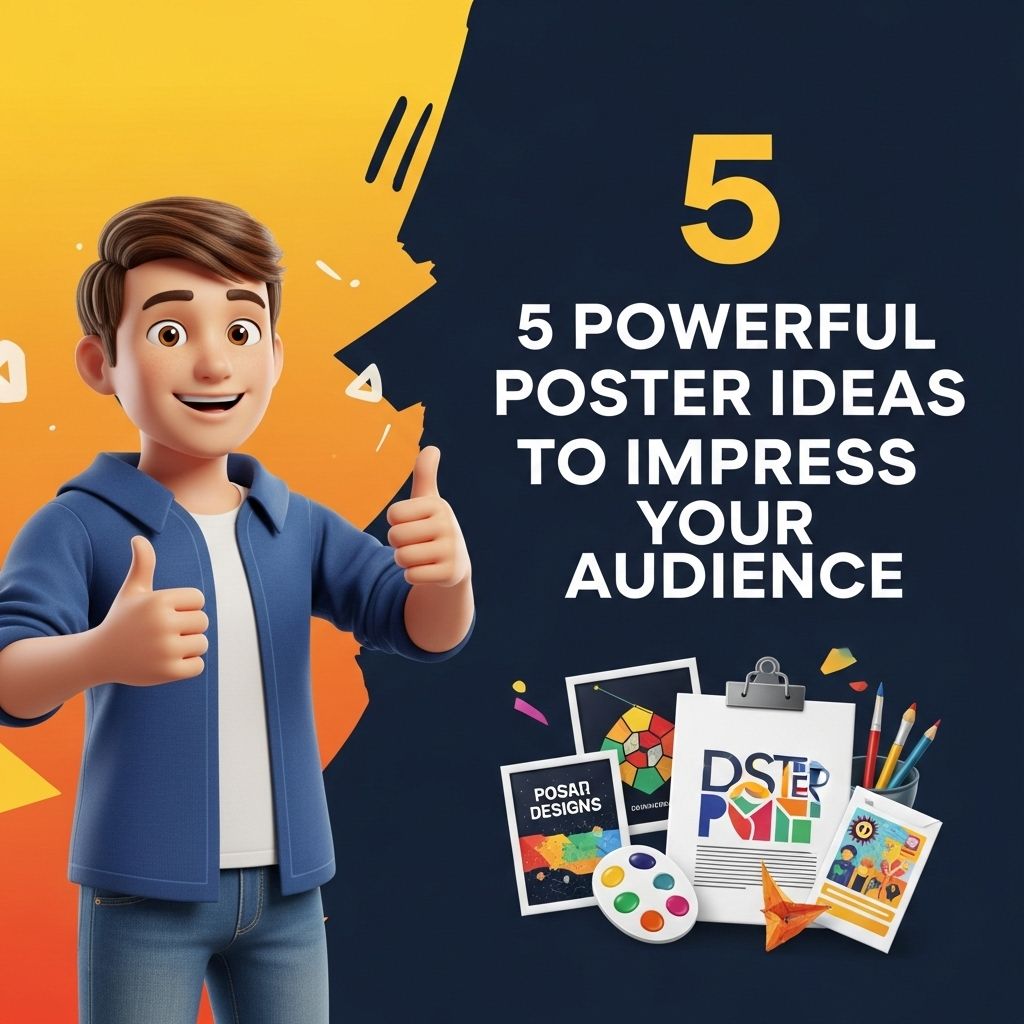
Creating a visually striking poster is an art form that can significantly enhance your message and capture your audience’s attention. Whether for a conference, an educational event, or a promotional campaign, a well-designed poster can leave a lasting impression. In this article, we will explore five powerful poster ideas that can elevate your presentation and engage your viewers.
Creating a captivating poster is essential for making a lasting impression on your audience. Here are five powerful poster ideas that can elevate your design and communicate your message effectively. For added inspiration, explore our logo mockup collection to envision how your branding can stand out.
Table of Contents
1. The Minimalist Approach
Less is often more when it comes to poster design. Embracing a minimalist approach can lead to striking visuals that convey a clear message without overwhelming the audience.
Key Elements of Minimalist Posters:
- Simple Color Palette: Choose two or three colors that complement each other.
- Bold Typography: Use large fonts to highlight key messages or slogans.
- Ample White Space: Let your content breathe by including plenty of white space.
- Focal Point: Create a singular focal point that draws the eye.
By following these principles, you can create a poster that is not only aesthetically pleasing but also effectively communicates your message.
2. Infographic Posters
Infographics are a fantastic way to present complex information in an easily digestible format. They allow you to combine visuals and data in a way that can capture and maintain attention.
Components of Effective Infographic Posters:
- Data Visualizations: Use charts, graphs, and icons to represent data visually.
- Clear Narrative: Tell a story through the flow of information.
- Consistent Style: Maintain a uniform color scheme and font style throughout.
Infographic posters are particularly effective in educational or research settings, where statistics and findings can be showcased compellingly. Consider the example below:
| Statistic | Visual Representation | Impact |
|---|---|---|
| 80% of learners prefer visuals | Bar chart showing preference levels | Highlights the importance of visual learning |
| 65% retention rate with infographics | Pie chart illustrating retention | Emphasizes effectiveness of infographics |
3. Interactive Posters
Incorporating interactivity into your posters can create a memorable experience for your audience. This approach encourages viewers to engage with the content actively.
Ways to Make Your Poster Interactive:
- QR Codes: Link to additional resources, videos, or websites.
- Augmented Reality (AR): Use AR apps to bring static images to life.
- Physical Elements: Include materials that viewers can touch or manipulate.
Interactive posters not only enhance engagement but also provide a deeper understanding of the subject matter. For example, a poster related to environmental issues could include a QR code that directs viewers to a virtual tour of affected areas.
4. Storytelling Through Imagery
Visual storytelling is a powerful technique that can convey emotions and messages effectively. Utilizing powerful images can create a connection with the audience and draw them into your narrative.
Tips for Effective Visual Storytelling:
- Select Impactful Images: Choose images that evoke emotion and relate to your message.
- Create a Visual Hierarchy: Organize images and text in a way that guides the viewer’s eye.
- Incorporate Quotes: Use powerful quotes alongside images to reinforce your message.
For instance, a poster advocating for mental health awareness might utilize images of diverse individuals alongside quotes about resilience, thereby creating a relatable and powerful message.
5. Thematic Posters
Thematic posters focus on a central theme that ties all design elements together. This approach is effective in creating a cohesive visual representation of a concept or idea.
Elements of Thematic Posters:
- Consistent Color Scheme: Use colors that reflect the theme.
- Thematic Fonts: Select fonts that align with the poster’s message.
- Unified Imagery: Choose images and graphics that support the central theme.
An example of a thematic poster could be one designed for a sustainability campaign, featuring earth tones, nature-related imagery, and quotes about environmental conservation. This cohesive approach creates a strong visual impact and enhances message retention.
Conclusion
Designing a powerful poster that impresses your audience requires careful consideration of visuals, text, and overall layout. By implementing these ideas—minimalism, infographics, interactivity, storytelling through imagery, and thematic designs—you can create posters that not only capture attention but also convey your message effectively. Remember to tailor your design to your audience and purpose, ensuring that your poster stands out in any setting.
FAQ
What are some effective design elements for a powerful poster?
Incorporate bold typography, striking images, a cohesive color scheme, and clear messaging to capture attention and convey your message effectively.
How can I choose the right colors for my poster?
Select colors that align with your brand identity and evoke the desired emotions; use contrasting colors to highlight important information.
What size should I make my poster for maximum impact?
The size depends on the venue and purpose, but common sizes include 24×36 inches for presentations or 11×17 inches for handouts, ensuring visibility from a distance.
How can I make my poster more interactive?
Consider adding QR codes that link to additional resources, incorporating augmented reality features, or using textures that invite touch.
What type of content is most engaging for a poster audience?
Use concise text, compelling visuals, and infographics to present information clearly and engagingly, making it easier for the audience to absorb.
How do I ensure my poster stands out at an event?
Utilize unique shapes, eye-catching graphics, and strategic placement to draw attention; also, ensure your message is clear and resonates with your target audience.