10 Essential Photoshop Tips for Beginners
Discover 10 must-know Photoshop tips that will enhance your skills and streamline your workflow as a beginner in graphic design.

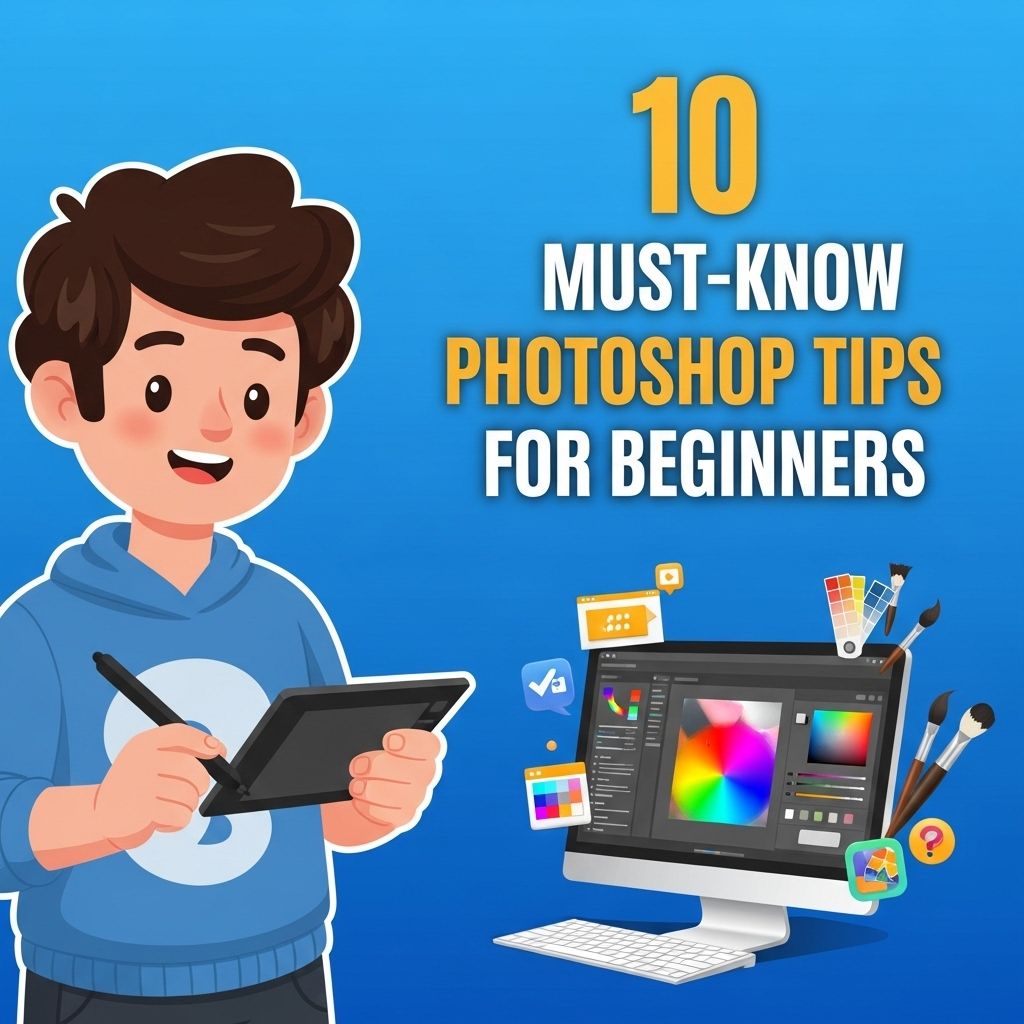
Adobe Photoshop is a powerful tool for image editing, graphic design, and digital art. For beginners, navigating its vast array of features can be daunting. This article will guide you through ten essential tips that every novice should know to make their Photoshop journey smoother and more productive.
Getting started with Photoshop can be both exciting and overwhelming for beginners. To help ease the learning curve, we’ve compiled a list of 10 essential tips that will enhance your skills and streamline your workflow. For those interested in practical application, check out our premium logo mockups to see how these techniques come to life.
Table of Contents
Understanding the Workspace
The first step in mastering Photoshop is getting familiar with its workspace. The interface can be overwhelming at first glance, but knowing where to find tools and panels will significantly enhance your workflow. Here are key components:
- Tools Panel: Located on the left side, this panel contains essential tools for selection, painting, and editing.
- Options Bar: Just above the canvas, this bar changes contextually based on the selected tool.
- Layers Panel: Found on the right, this is where you manage layers, which are fundamental to any non-destructive editing.
Starting with Layers
Layers are the backbone of Photoshop. They allow you to work on individual elements without affecting others. Here are some tips for managing layers effectively:
Creating and Organizing Layers
- Create a New Layer: Use
Ctrl + Shift + N(Windows) orCmd + Shift + N(Mac) to create a new layer quickly. - Name Your Layers: Double-click on a layer’s name in the Layers Panel to rename it for better organization.
- Group Layers: Select multiple layers and press
Ctrl + G(Windows) orCmd + G(Mac) to group them.
Utilizing Selection Tools
Mastering selection tools is crucial for precise editing. They allow you to isolate parts of your image for manipulation. Here are some selection tools you’ll frequently use:
| Tool | Description |
|---|---|
| Marquee Tool | For rectangular or elliptical selections. |
| Lasso Tool | For freeform selections. |
| Magic Wand | Selects areas based on color similarity. |
Adjusting Image Colors and Tones
Color correction is an essential part of photo editing. Here are some simple adjustments you can make:
Using Adjustment Layers
Instead of applying color adjustments directly to an image layer, use adjustment layers for non-destructive editing:
- Select Layer > New Adjustment Layer and choose from options like Brightness/Contrast, Levels, or Curves.
- Adjust the settings until you achieve the desired look.
Exploring Filters
Filters can add unique effects to your images. Here’s how to apply and manage filters:
Applying Filters
- Select the layer you wish to edit.
- Go to Filter in the top menu and choose a filter (e.g., Gaussian Blur, Sharpen).
- Adjust the settings in the dialog box that appears.
Working with Text
Text can enhance your designs significantly. Here are some tips for working with text in Photoshop:
Adding and Editing Text
- Select the Text Tool (T) from the Tools Panel.
- Click on your canvas and type your text.
- Use the Options Bar to adjust font, size, and color.
Saving and Exporting Your Work
Knowing how to save and export your work is as important as creating it. Here’s a quick guide:
Saving Your Project
To preserve all layers for future editing, save your project as a PSD file:
- Go to File > Save As.
- Choose Photoshop (.PSD) as the format.
Exporting for Web or Print
For sharing your images, export them in the required format:
- Go to File > Export > Export As.
- Choose the format (e.g., JPEG, PNG) and adjust the quality settings.
Shortcuts to Enhance Your Workflow
Learning keyboard shortcuts can dramatically speed up your work. Here are some essential shortcuts:
| Action | Shortcut |
|---|---|
| Select All | Ctrl + A (Windows) / Cmd + A (Mac) |
| Deselect | Ctrl + D (Windows) / Cmd + D (Mac) |
| Undo | Ctrl + Z (Windows) / Cmd + Z (Mac) |
Conclusion
By familiarizing yourself with these ten essential Photoshop tips, you’ll set a solid foundation for your editing skills. Practice these techniques regularly, and don’t hesitate to explore the vast array of features Photoshop offers. With time and experience, you will create stunning visuals that meet your creative vision.
FAQ
What are some essential Photoshop tips for beginners?
Some essential Photoshop tips for beginners include understanding layers, using keyboard shortcuts, mastering the selection tools, learning to use adjustment layers, and experimenting with blending modes.
How do I use layers effectively in Photoshop?
To use layers effectively in Photoshop, always keep your layers organized by naming them, using groups, and adjusting their opacity and blending modes to create depth and effects.
What are the best keyboard shortcuts for beginners in Photoshop?
Some of the best keyboard shortcuts for beginners include ‘Ctrl + Z’ for undo, ‘Ctrl + T’ for transform, ‘B’ for brush, and ‘V’ for the move tool.
How can I improve my selection skills in Photoshop?
To improve your selection skills in Photoshop, practice using tools like the Magic Wand, Lasso, and Quick Selection tools, and learn to refine your selections with the Select and Mask feature.
What are adjustment layers and why are they important?
Adjustment layers in Photoshop allow you to edit colors and tones non-destructively, meaning you can make changes without altering the original image, which is crucial for maintaining flexibility in your workflow.
How can blending modes enhance my Photoshop projects?
Blending modes in Photoshop can enhance your projects by allowing layers to interact in various ways, creating different visual effects and styles that can add depth and interest to your designs.