Mastering Composition Rules in Photography
Discover essential composition rules in photography to enhance your skills and create stunning images that captivate your audience.

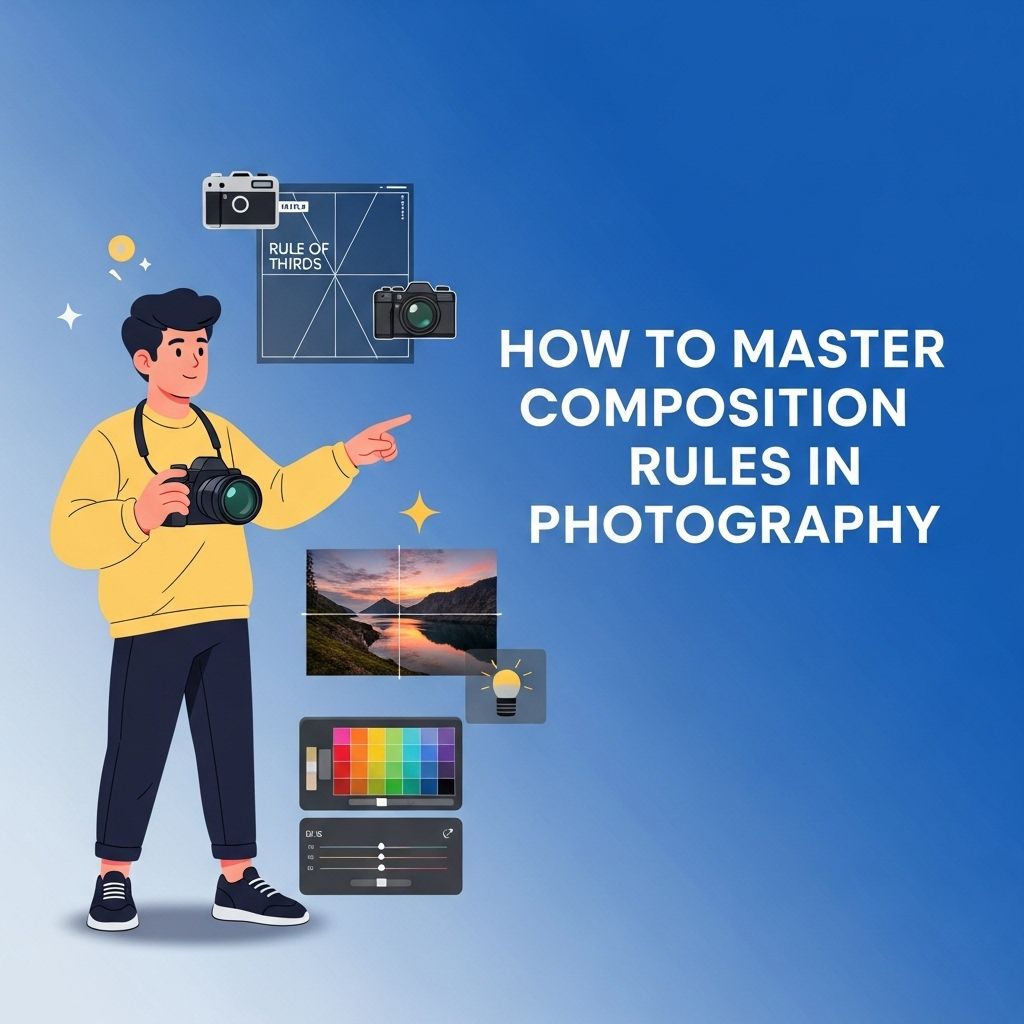
Mastering composition in photography is crucial for anyone looking to elevate their art and deliver stunning visual narratives. Composition refers to how elements are arranged within the frame, and understanding the rules can significantly enhance the storytelling aspect of your images. In this article, we will delve into the essential composition rules every photographer should know, providing insights and practical tips that can transform your approach to capturing images.
Mastering composition rules in photography is essential for creating visually compelling images that draw the viewer’s eye. Understanding principles like the rule of thirds, leading lines, and framing can significantly elevate the quality of your work, making it not only more impactful but also more aesthetically pleasing. For those seeking to enhance their creative projects, download stunning logo mockups to see how effective composition can transform design.
Table of Contents
The Importance of Composition
Composition is not just about aesthetics; it plays a pivotal role in how a viewer perceives a photograph. A well-composed image can evoke emotions, guide the viewer’s eye, and convey a message with clarity. Here are some key reasons why composition is essential:
- Enhances visual appeal
- Guides the viewer’s attention
- Conveys a mood or story
- Creates balance and harmony
Basic Composition Rules
1. Rule of Thirds
The Rule of Thirds is one of the most fundamental principles in photography. Imagine dividing your frame into a three-by-three grid, resulting in nine equal parts. The theory suggests that by placing the main subject along these lines or at their intersections, you can create more tension and interest in the image.
2. Leading Lines
Leading lines are natural lines that guide the viewer’s eye to the main subject of the photograph. These can be roads, pathways, fences, or any lines that draw attention toward the focal point. Using leading lines can enhance depth and dimensionality in your images.
3. Framing
Framing involves using elements within your environment to create a ‘frame’ around your subject. This technique can add context and focus to your subject, making it stand out while integrating it with the surrounding environment.
4. Symmetry and Patterns
Symmetry is visually appealing and can create a sense of harmony in your images. Patterns, whether natural or man-made, can also create intriguing compositions. Look for symmetry in architecture, nature, and even human subjects.
5. Depth of Field
Manipulating depth of field can significantly affect composition. A shallow depth of field can isolate your subject from the background, drawing more attention to it. Conversely, a deep depth of field can include more elements in focus, creating a comprehensive narrative.
Advanced Composition Techniques
1. The Golden Ratio
The Golden Ratio is an artistic principle that has been utilized for centuries. It suggests that your composition should follow a spiral pattern, often referred to as the Fibonacci spiral. This technique is believed to create a naturally pleasing aesthetic. To apply this:
- Visualize a spiral overlaying your image.
- Position critical elements along the spiral’s path.
- Ensure the focal point lies at the center of the spiral.
2. Negative Space
Negative space is the area around your subject that helps to emphasize it. By incorporating negative space, you can create balance and draw attention to your main subject without distractions. This technique works especially well in minimalist photography.
3. Contrast and Color
Using contrast, whether through color, light, or texture, can help separate elements within your composition. High contrast can evoke strong emotions while harmonious colors can create a peaceful feeling. Understand the color wheel and utilize complimentary colors to enhance your images.
Practical Tips for Improving Your Composition
1. Experiment with Angles
Don’t be afraid to change your perspective. Shoot from above, below, or the side of your subject. Different angles can dramatically change the composition and the viewer’s interpretation of the scene.
2. Use a Tripod
A tripod can stabilize your camera and give you the freedom to take your time composing the shot. This is particularly useful in low light situations or when experimenting with different compositions.
3. Take Your Time
Rushing through your shot can lead to missed opportunities for great composition. Take a moment to observe your surroundings and consider how to frame your shot effectively.
Practice Exercises to Enhance Composition Skills
Improving your composition skills requires practice and experimentation. Here are some exercises to help you develop a keen eye for composition:
1. 30-Day Composition Challenge
Each day, focus on a different composition rule. Spend time exploring how each rule can alter your images. For example, on one day, focus solely on the Rule of Thirds, while on another, experiment with leading lines.
2. Analyze Your Favorite Photos
Study images that resonate with you. Analyze their composition. What makes them successful? Identify what techniques the photographer utilized to enhance the image.
3. Join a Photography Group
Engaging with other photographers can provide valuable feedback and insights. Participate in group critiques or challenges to learn different perspectives on composition.
Conclusion
Mastering composition in photography is a journey that involves practice, observation, and creativity. By familiarizing yourself with both basic and advanced composition techniques, you can significantly enhance the impact of your images. Remember, rules are meant to be learned so that you can then break them creatively. Ultimately, your unique vision and voice will shine through in your work, making it truly memorable.
FAQ
What are the basic composition rules in photography?
The basic composition rules in photography include the Rule of Thirds, leading lines, framing, symmetry, and the use of negative space.
How does the Rule of Thirds enhance a photograph?
The Rule of Thirds enhances a photograph by dividing the image into a 3×3 grid, allowing photographers to position subjects along these lines or at their intersections for a more balanced and engaging composition.
What is the importance of leading lines in photography?
Leading lines draw the viewer’s eye into the photograph, guiding them towards the main subject and creating a sense of depth and perspective.
How can framing improve my photography?
Framing involves using elements within the scene to create a ‘frame’ around the subject, which can add context, focus attention, and enhance the overall composition.
What is negative space and how is it used in photography?
Negative space refers to the empty or unoccupied areas around the subject. It is used to create balance, highlight the subject, and evoke emotions by providing a sense of isolation or simplicity.
Can I break composition rules in photography?
Yes, while understanding and using composition rules is essential, breaking them can lead to creative and unique photographs that express your personal style.