Mastering Canon Camera Settings: A Complete Guide
Unlock the full potential of your Canon camera with our comprehensive guide on mastering its settings for stunning photography.

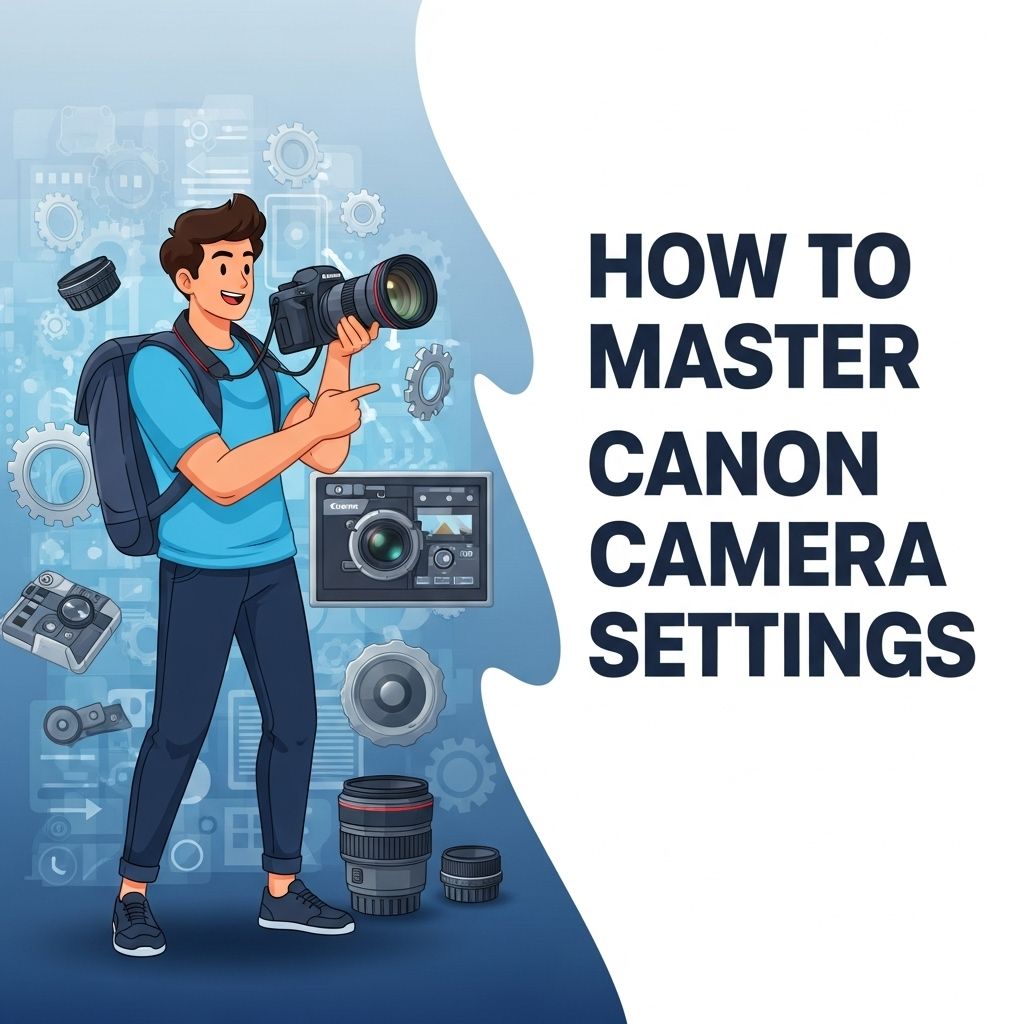
Mastering your Canon camera settings is essential for any photographer who desires to take their skills to the next level. Understanding how to manipulate the various settings enables you to capture stunning images in diverse conditions, enhancing both your creativity and technical prowess. This article will delve into the core Canon camera settings, how to adjust them, and the impact they have on your photography.
In the world of photography, mastering your Canon camera settings can transform your images from ordinary to extraordinary. This complete guide will delve into key settings that can enhance your shooting experience and creativity. For those looking to elevate other aspects of their visual content, you can download stunning logo mockups to complement your photography.
Table of Contents
Understanding the Basics of Canon Camera Settings
Before diving into specifics, it’s important to grasp the fundamental settings that govern exposure, focus, and overall image quality. The three primary components of exposure are known as the exposure triangle:
- Aperture: Refers to the size of the lens opening, which controls the amount of light entering the camera.
- Shutter Speed: Determines how long the camera’s shutter remains open, influencing motion blur.
- ISO: Measures the camera sensor’s sensitivity to light. A higher ISO allows for shooting in low-light conditions but may introduce noise.
The Exposure Triangle Explained
Aperture
The aperture setting is measured in f-stops (e.g., f/1.8, f/4, f/16). A lower f-stop means a wider aperture, allowing more light and creating a shallower depth of field. Here’s how aperture affects your photography:
- Wider Aperture (Lower f-stop): Ideal for portraits, as it blurs the background.
- Narrower Aperture (Higher f-stop): Suitable for landscapes, producing greater depth of field.
Shutter Speed
Shutter speed is crucial for freezing motion or introducing motion blur. Here are some common speed ranges:
| Shutter Speed | Effect |
|---|---|
| 1/1000 sec | Freezes fast action (e.g., sports) |
| 1/30 sec | Captures moderate motion |
| 1 sec or longer | Creates light trails or motion blur |
ISO Sensitivity
ISO settings range from 100 to 6400 or higher, depending on the camera model. Consider the following:
- Low ISO (100-200): Best for bright conditions, producing clean images.
- Medium ISO (400-800): Versatile for various lighting situations.
- High ISO (1600+): Useful in low-light environments but may introduce noise.
Practical Steps to Adjust Settings
Now that you understand the exposure triangle, here’s how you can adjust settings on your Canon camera:
Using the Mode Dial
The Canon camera mode dial allows you to select various shooting modes:
- Auto Mode: Great for beginners; the camera selects the optimal settings.
- Aperture Priority (Av): You set the aperture, and the camera adjusts the shutter speed.
- Shutter Priority (Tv): You set the shutter speed, and the camera adjusts the aperture.
- Manual Mode (M): Complete control over aperture, shutter speed, and ISO.
Adjusting Settings in Manual Mode
In Manual Mode, follow these guidelines to achieve the best results:
- Set your ISO according to the light conditions.
- Choose your desired aperture based on your depth of field needs.
- Adjust your shutter speed to correctly expose the image.
Advanced Techniques for Mastery
Understanding Metering Modes
Cameras utilize different metering modes to measure the light in a scene:
- Evaluative Metering: The default mode, considers the entire frame for exposure.
- Center-weighted Metering: Focuses on the center of the frame, useful for subjects in bright backgrounds.
- Spot Metering: Measures a small part of the scene, ideal for high-contrast situations.
Focus Modes
Knowing how to adjust focus settings can drastically improve the sharpness of your images:
- One-Shot AF: Best for still subjects; focus locks when you press the shutter button halfway.
- AI Servo AF: Ideal for moving subjects; continuously adjusts focus while tracking movement.
- AI Focus AF: Automatically switches between One-Shot and AI Servo based on subject movement.
Post-Processing Considerations
Even the best-captured images can benefit from post-processing. Here are some tips:
- Use Adobe Lightroom or Photoshop for raw image editing.
- Adjust exposure, contrast, and color balance as needed.
- Consider noise reduction techniques for high ISO images.
Conclusion
Mastering your Canon camera settings is a rewarding journey that opens up endless possibilities in photography. By understanding and applying the principles of the exposure triangle, adjusting critical settings, and exploring advanced techniques, you will be well on your way to becoming a skilled photographer. Practice is key—experiment with different settings in various lighting conditions to truly grasp their impact on your images. Happy shooting!
FAQ
What are the essential Canon camera settings for beginners?
Beginners should focus on understanding the exposure triangle: aperture, shutter speed, and ISO. Starting in ‘Auto’ mode can help, but moving to ‘Manual’ or ‘Aperture Priority’ will allow for more creative control.
How do I adjust the aperture on my Canon camera?
To adjust the aperture, switch your camera to ‘Av’ mode for Aperture Priority, then use the main dial to increase or decrease the f-stop value, which controls the amount of light entering the lens.
What is the best shutter speed setting for action photography?
For action photography, a shutter speed of at least 1/500th of a second is recommended to freeze motion. Adjust based on the speed of the subject and lighting conditions.
How can I improve low-light photography with my Canon camera?
To improve low-light photography, increase the ISO setting, use a wider aperture (lower f-stop number), and reduce shutter speed while ensuring you have a steady hand or tripod.
What is the benefit of shooting in RAW format on a Canon camera?
Shooting in RAW format preserves more image data, allowing for better post-processing flexibility, including adjustments to exposure, white balance, and color grading without losing quality.
How do I reset my Canon camera settings to factory defaults?
To reset your Canon camera settings, go to the menu, find ‘Settings’, and select ‘Reset all settings’. This will restore the camera to its original factory settings.