
Mastering Active Listening: Skills for Effective Communication
Discover essential techniques to enhance your active listening skills and improve your communication in personal and professional settings.
Active listening is a critical skill that can transform your communication abilities, enhance relationships, and improve understanding in both personal and professional interactions. It requires more than just hearing the words spoken; it’s about fully immersing yourself in the conversation and demonstrating your engagement. In this article, we will explore the components of active listening, techniques to improve these skills, and the benefits they can bring to your interactions.
Mastering active listening is crucial for effective communication and can significantly enhance your interactions in both personal and professional settings. By honing this skill, you can foster deeper connections, understand differing perspectives, and respond more thoughtfully. For those interested in elevating their branding communications, view 3D logo variations.
Understanding Active Listening
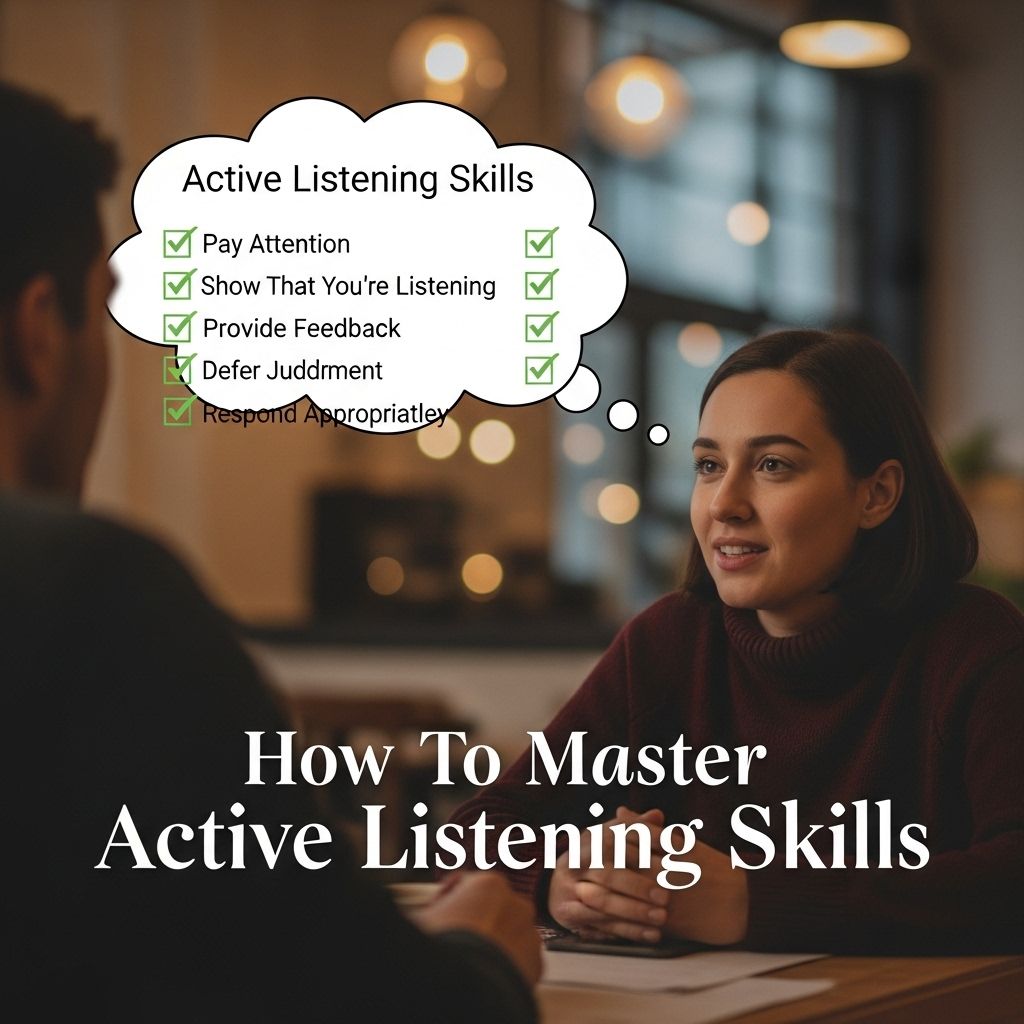
Active listening involves several components that work together to create a deeper level of communication. It’s not just about the act of listening; it’s about how you respond and engage with the speaker. The following elements are crucial:
- Paying Attention: This means focusing on the speaker, avoiding distractions, and showing that you are interested.
- Showing That You’re Listening: Use body language, nodding, and verbal acknowledgments to show engagement.
- Providing Feedback: Reflect on what has been said by paraphrasing, summarizing, or asking clarifying questions.
- Deferring Judgment: Keep an open mind and avoid forming a response until the speaker has finished.
- Responding Appropriately: After fully understanding the message, provide a thoughtful response that shows comprehension.
The Importance of Active Listening
Active listening is essential for effective communication and has multiple benefits, including:
Improved Relationships
When individuals feel heard, it strengthens trust and respect. This can lead to:
- Enhanced collaboration in teams
- Stronger personal relationships
- Effective conflict resolution
Increased Understanding
Active listening helps to clarify messages and reduce misunderstandings, resulting in:
- Better comprehending complex information
- Fewer miscommunications
- Informed decision-making
Personal Growth
This skill also allows for self-reflection and growth by:
- Encouraging empathy
- Enhancing critical thinking skills
- Increasing emotional intelligence
Techniques to Enhance Active Listening Skills
Here are some practical techniques to develop and strengthen your active listening skills:
1. Focus on the Speaker
Make eye contact, put away distractions, and give your full attention to the speaker. This includes:
- Avoiding phone usage
- Minimizing external noise
2. Use Verbal and Non-Verbal Cues
Demonstrate that you’re listening through:
- Nodding your head
- Using verbal affirmations like “I see” or “Go on.”
- Mirroring body language
3. Paraphrase and Summarize
After the speaker finishes, reflect back what you’ve heard to verify understanding:
“So what you’re saying is…”
4. Ask Clarifying Questions
If something is unclear, don’t hesitate to ask questions such as:
- “Can you explain that further?”
- “What did you mean by that?”
5. Develop Empathy
Try to understand the speaker’s perspective and feelings. This can be cultivated by:
- Putting yourself in their shoes
- Validating their emotions
Overcoming Barriers to Active Listening
Despite the benefits, active listening can be challenging due to various barriers:
1. Distractions
Identify and remove potential distractions like:
- Turning off notifications
- Finding a quiet space
2. Preconceived Notions
Avoid jumping to conclusions before the speaker has finished. This can be addressed by:
- Practicing open-mindedness
- Recognizing your biases
3. Emotional Reactions
Strong emotions can cloud judgment. Manage this by:
- Taking deep breaths
- Focusing on the speaker’s words
Practice Scenarios for Active Listening
To develop your skills, try the following practice scenarios:
| Scenario | Objective |
|---|---|
| Listening to a colleague’s project update | Practice summarizing key points. |
| Engaging in a discussion with a friend about their problems | Focus on emotional responses and empathizing. |
| Participating in a team meeting | Ask clarifying questions and provide constructive feedback. |
Measuring Your Progress
As with any skill, it’s essential to measure your improvement in active listening. A few methods include:
- Self-reflection after conversations
- Seeking feedback from peers
- Keeping a journal of your listening experiences
Conclusion
Mastering active listening is a journey that requires practice and dedication. By focusing on the key components and techniques outlined in this article, you’ll be able to enhance your communication skills, improve your relationships, and foster a deeper understanding of those around you. Whether in the workplace or in personal interactions, the ability to listen actively can make a significant difference.
FAQ
What are active listening skills?
Active listening skills involve fully concentrating, understanding, responding, and remembering what is being said in a conversation.
Why is mastering active listening important?
Mastering active listening is important because it enhances communication, builds trust, and improves relationships in both personal and professional settings.
What are some techniques to improve active listening?
Techniques to improve active listening include maintaining eye contact, summarizing what the speaker said, asking clarifying questions, and providing verbal affirmations.
How can I practice active listening in everyday conversations?
You can practice active listening by giving your full attention to the speaker, avoiding interruptions, and reflecting back on what you hear to ensure understanding.
Can active listening be beneficial in a workplace environment?
Yes, active listening can greatly benefit workplace environments by fostering better collaboration, reducing misunderstandings, and enhancing problem-solving.