10 Essential Rules for Stunning Photography
Discover the 10 essential rules that will elevate your photography skills and help you capture stunning images every time.
Photography is an art form that combines technical skills with creativity. To truly capture the beauty of the world around us, certain principles must be adhered to. Whether you’re a novice with a smartphone or an experienced professional wielding a DSLR, mastering these essential rules can elevate your photography to stunning new heights.
Capturing stunning photographs requires more than just a good camera—it involves understanding essential techniques that can elevate your work. In this guide, we will explore 10 fundamental rules that every photographer should know to enhance their skills and create breathtaking images. Whether you’re a beginner or looking to refine your craft, these tips will help you achieve your artistic vision. For those interested in presenting their work professionally, check out these download stunning logo mockups.
Understanding Composition
The backbone of any great photograph is its composition. This refers to how various elements within the frame are arranged and interact with each other. Here are some fundamental principles of composition:
The Rule of Thirds
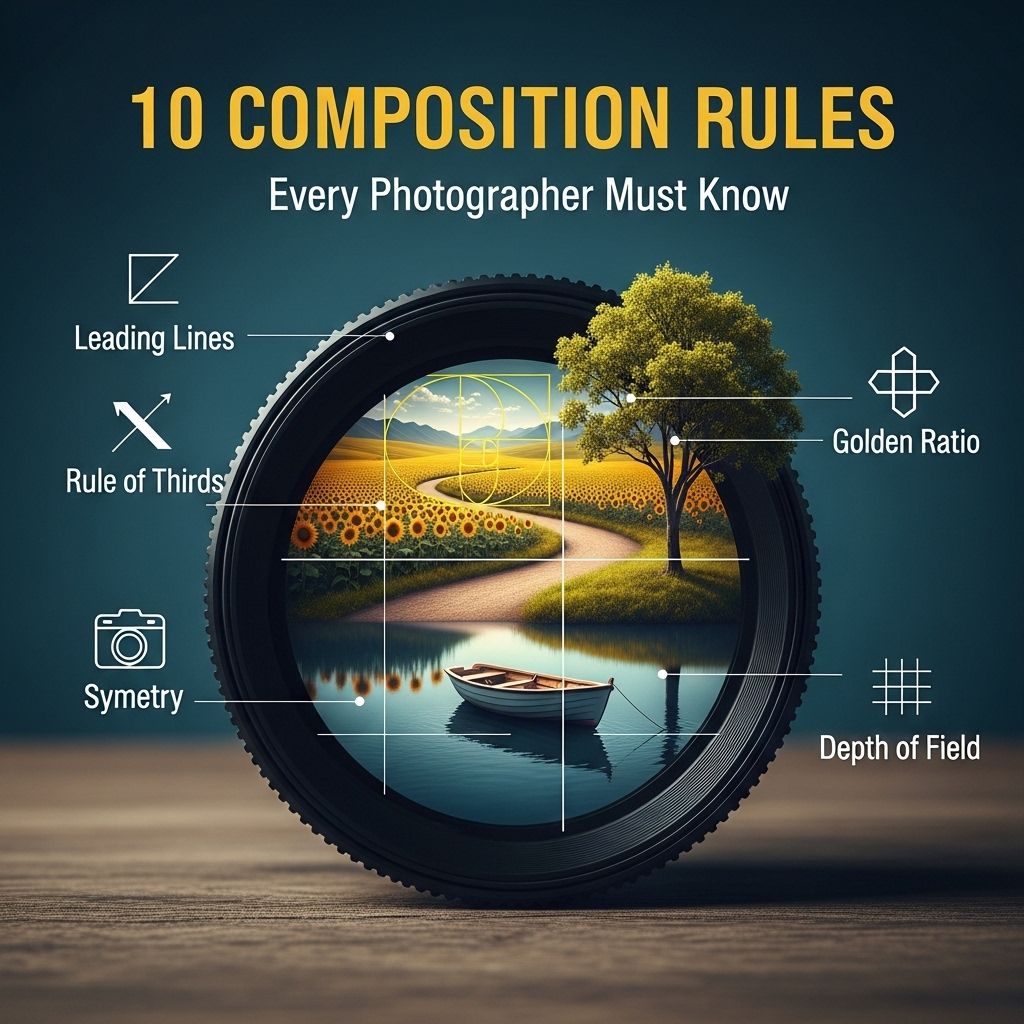
This classic technique involves dividing your frame into a 3×3 grid. Place the most important elements of your scene along these lines or at their intersections to create a more balanced and interesting photograph.
Leading Lines
Utilize natural lines within your scene to guide the viewer’s eye towards the main subject. Roads, rivers, fences, and shadows can all serve as leading lines.
Framing
Incorporate elements in the foreground to frame your subject. This adds depth and context, helping to draw attention to your main focus.
Mastering Light
Lighting can make or break a photograph. Understanding how to manipulate and utilize light is crucial for stunning images.
Golden Hour
The golden hour, which occurs shortly after sunrise and before sunset, produces soft, warm lighting that enhances colors and textures in your photographs. Aim to shoot during this time for the best results.
Use of Flash
Flash isn’t just for low-light situations. It can also be used creatively during the day to fill in shadows and highlight details.
Choosing the Right Equipment
While it’s true that a good photographer can work with any camera, having the right equipment can enhance your possibilities.
Camera Types
| Type | Best For | Features |
|---|---|---|
| DSLR | Professional Shooters | Interchangeable lenses, superior image quality |
| Mirrorless | Versatile and Compact | Lightweight, excellent video capabilities |
| Smartphone | Everyday Use | Portability, instant sharing |
Lenses Matter
The lens you choose can significantly affect the outcome of your photographs. Here are some common types and their uses:
- Wide-Angle Lens: Ideal for landscapes and architecture.
- Telephoto Lens: Great for wildlife and portraits, allowing you to capture distant subjects.
- Macro Lens: Perfect for detailed close-ups of small subjects.
Post-Processing Techniques
Editing your images can profoundly affect their final appearance. Here are some essential post-processing tips:
Software Options
Various software tools can enhance your workflow:
- Adobe Lightroom: Excellent for organizing and editing.
- Photoshop: Offers advanced editing capabilities for professionals.
- Capture One: Known for its color accuracy and tethering features.
Basic Editing Techniques
- Crop: Remove distractions and improve composition.
- Adjust Exposure: Correct underexposed or overexposed images.
- Enhance Colors: Use saturation and vibrance tools for a visual pop.
Understanding Your Subject
To capture stunning photographs, you need to develop a connection with your subject. Here are some tips:
Be Patient
Good photography often requires waiting for the right moment. Take your time to observe your surroundings and anticipate the perfect shot.
Research
Whether you’re photographing wildlife, landscapes, or street scenes, understanding your subject will lead to better compositions. Knowledge of behaviors, movements, and characteristics will allow you to capture evocative moments.
Experimentation and Creativity
Don’t be afraid to experiment with different techniques and styles. Here are some ideas:
Try Different Perspectives
Change your viewpoint by getting low to the ground or climbing to a higher vantage point. This can yield dramatic changes in your composition.
Play with Exposure
Long exposures can create unique effects, such as blurring motion in water or adding light trails at night.
Final Thoughts
Becoming a stunning photographer requires practice, patience, and an understanding of both technical skills and artistic principles. By following these essential rules and continuously refining your craft, you can create captivating images that tell a story and evoke emotions. Remember that every photographer has their unique style, and the most important rule is to keep shooting and enjoy the process!
FAQ
What are the essential rules for stunning photography?
The essential rules for stunning photography include understanding composition, utilizing natural light, mastering the exposure triangle, focusing on the subject, experimenting with angles, and practicing patience.
How does composition affect photography?
Composition affects photography by guiding the viewer’s eye and creating a sense of balance and harmony within the image, making it more visually appealing.
Why is lighting important in photography?
Lighting is crucial in photography as it influences the mood, clarity, and overall quality of the image, with natural light often providing the best results.
What is the exposure triangle in photography?
The exposure triangle consists of aperture, shutter speed, and ISO, which work together to control the exposure of an image and affect its depth of field, motion blur, and noise.
How can I improve my photography skills?
To improve your photography skills, practice regularly, study the work of other photographers, learn the technical aspects of your camera, and seek feedback on your work.
What tips can help with photographing moving subjects?
To photograph moving subjects effectively, use a fast shutter speed, anticipate the action, and set your camera to continuous shooting mode to capture multiple frames.