
10 Must-Have Tools for Mechanical Engineers
Discover the top 10 essential tools every mechanical engineer needs for efficiency and precision in their projects.

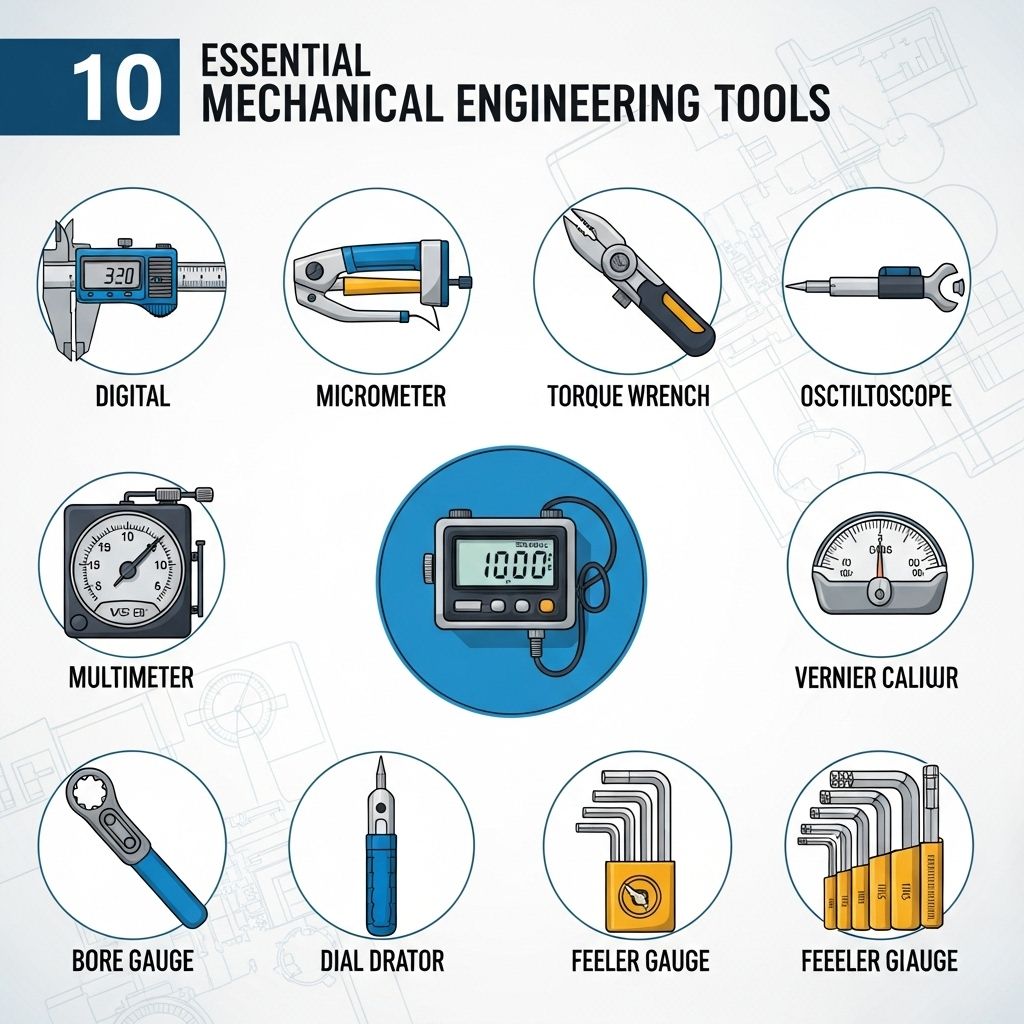
In the fast-paced world of mechanical engineering, the right tools can make all the difference in efficiency and accuracy. Whether you’re a student, a professional engineer, or simply a hobbyist, understanding the essential tools of the trade is crucial. This article delves into ten indispensable mechanical engineering tools that every engineer should be familiar with, exploring their uses, importance, and impact on the engineering process.
For mechanical engineers, possessing the right tools is essential to streamline design and enhance productivity. From advanced CAD software to precision measurement instruments, these tools form the backbone of effective engineering solutions. For instance, tools that allow you to visualize your 3D logo concepts can significantly improve design presentations and client communications.
Table of Contents
1. CAD Software
Computer-Aided Design (CAD) software is a cornerstone of modern mechanical engineering. It allows engineers to create precise drawings and models, simulating mechanics and dynamics in a virtual environment.
Popular CAD Software
- AutoCAD
- SolidWorks
- CATIA
- Siemens NX
- PTC Creo
2. 3D Printers
3D printing technology has revolutionized prototyping in mechanical engineering. Engineers can create physical models from digital designs, allowing for quick iterations and testing of concepts.
Benefits of 3D Printing
- Rapid prototyping
- Cost-effective production of complex geometries
- Reduced waste material
- Customization and personalization
3. Calipers
Calipers are precision instruments used to measure the distance between two opposite sides of an object. They are commonly utilized in mechanical engineering for accurate measurements.
Types of Calipers
| Type | Description |
|---|---|
| Vernier Caliper | Allows for precise measurements with a main scale and a sliding scale. |
| Digital Caliper | Provides instant readings on an electronic display. |
| Micrometer Caliper | Used for measuring small dimensions with high accuracy. |
4. Hand Tools
Despite the rise of digital tools, traditional hand tools remain invaluable in mechanical engineering. These tools support a variety of tasks, from assembly to repair.
Essential Hand Tools
- Wrenches
- Screwdrivers
- Pliers
- Hammers
- Files
5. Measuring Instruments
Accurate measurements are vital in engineering. Besides calipers, various measuring instruments are used to ensure precision.
Common Measuring Instruments
- Height Gauges
- Dial Indicators
- Laser Distance Meters
- Gauge Blocks
6. Simulation Software
Simulation software enables engineers to analyze how a design behaves under various conditions, including stress, heat, and fluid dynamics.
Applications of Simulation Software
- Finite Element Analysis (FEA)
- Computational Fluid Dynamics (CFD)
- Thermal Analysis
- Multibody Dynamics (MBD)
7. Oscilloscope
For engineers working in fields involving electronics and controls, oscilloscopes are essential. These devices visualize electrical signals, allowing for effective troubleshooting and analysis.
Key Features of Oscilloscopes
- Waveform visualization
- Triggering capabilities
- Measurement tools for voltage, frequency, and rise time
- Automatic and manual triggering modes
8. CNC Machines
Computer Numerical Control (CNC) technology automates machining processes, enhancing precision and efficiency in manufacturing. CNC machines are indispensable for producing complex parts.
Types of CNC Machines
| Type | Description |
|---|---|
| CNC Mills | Used for cutting and shaping materials. |
| CNC Lathes | Ideal for creating cylindrical parts. |
| CNC Routers | Perfect for cutting softer materials like wood. |
9. Toolboxes and Storage Solutions
Efficient organization of tools is crucial for productivity. A well-structured toolbox or storage system allows engineers to access the right tools quickly.
Features of Effective Tool Storage
- Labeling and organization by type
- Portable and sturdy design
- Lockable compartments for security
- Customization options for specific tool requirements
10. Safety Gear
Safety should never be compromised in mechanical engineering. Proper safety gear protects engineers while they work with tools and machinery.
Essential Safety Gear
- Safety goggles
- Gloves
- Ear protection
- Hard hats
- Steel-toe boots
In conclusion, the tools listed here are essential for anyone involved in mechanical engineering, whether in design, prototyping, or manufacturing. Understanding their uses not only enhances productivity but also contributes to safety and quality in engineering practices.
FAQ
What are the essential tools for mechanical engineering?
Essential tools for mechanical engineering include calipers, micrometers, torque wrenches, CAD software, 3D printers, and CNC machines.
Why is CAD software important in mechanical engineering?
CAD software is crucial in mechanical engineering as it allows for precise design, modification, and analysis of components and systems.
What is the purpose of a torque wrench in mechanical engineering?
A torque wrench is used to apply a specific torque to fasteners, ensuring proper assembly and preventing damage to components.
How do calipers and micrometers differ in measurement?
Calipers are used for measuring external and internal dimensions and depths, while micrometers provide more precise measurements, typically down to thousandths of an inch.
What role does 3D printing play in mechanical engineering?
3D printing is used in mechanical engineering for rapid prototyping, allowing engineers to create and test designs quickly and efficiently.
What is the function of CNC machines in mechanical engineering?
CNC machines automate the process of manufacturing by precisely cutting, shaping, and fabricating materials based on computer-aided designs.