10 Essential Tools for Materials Science You Need
Discover the top 10 essential tools for materials science that every researcher and engineer should have in their toolkit.

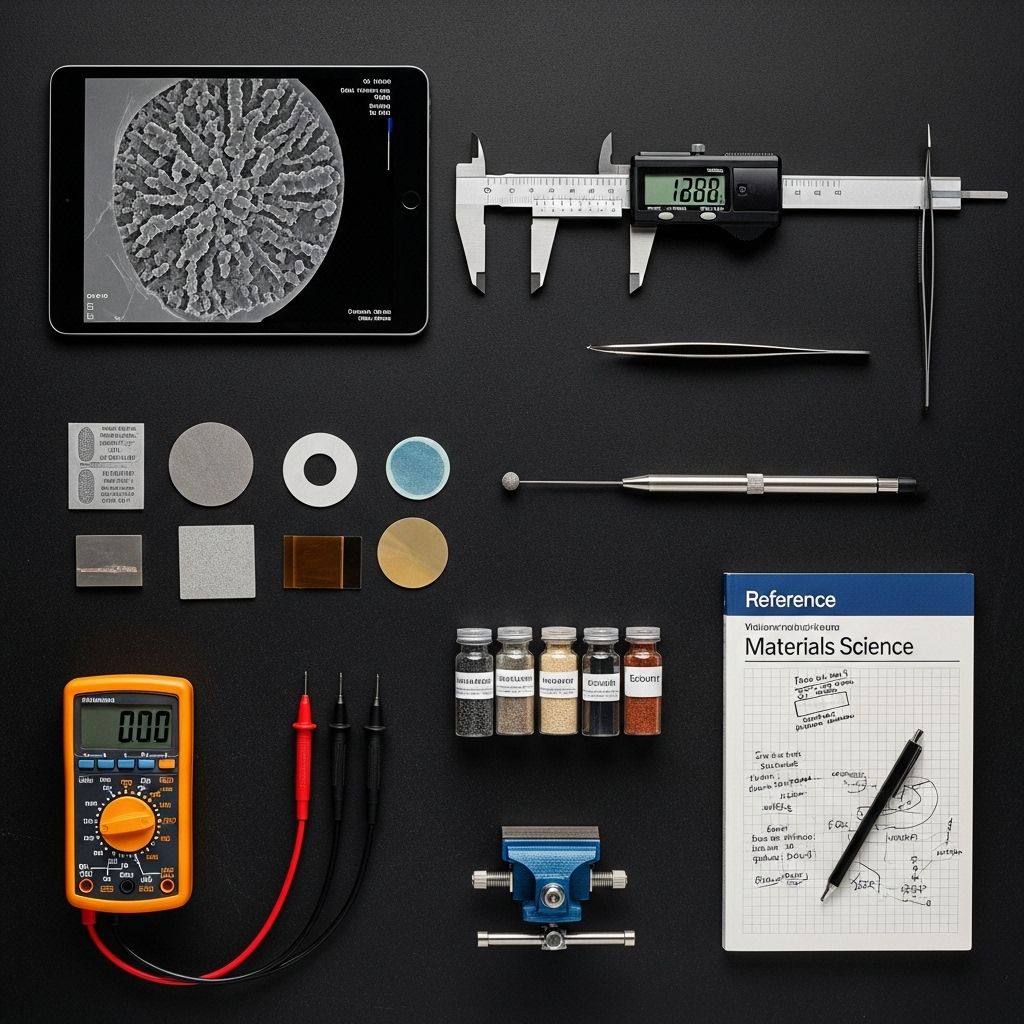
In the ever-evolving field of materials science, researchers and engineers rely on a variety of sophisticated tools to explore, characterize, and manipulate materials at the atomic and molecular levels. The choice of tools can significantly impact the quality and efficiency of research, development, and industrial applications. This article outlines ten essential tools commonly used in materials science, highlighting their functions, applications, and significance in advancing our understanding of materials.
In the dynamic field of materials science, having the right tools is crucial for effective research and experimentation. From advanced imaging systems to simulation software, these essential instruments can significantly enhance your work. For those interested in presenting their findings, you may also want to view 3D logo variations for an impactful visual representation.
Table of Contents
1. Scanning Electron Microscope (SEM)
The scanning electron microscope is an indispensable tool in materials science, providing high-resolution images of material surfaces. Unlike optical microscopes, SEM uses focused beams of electrons to achieve magnification levels up to 1,000,000x.
Applications of SEM:
- Surface morphology analysis
- Elemental analysis through Energy Dispersive X-ray Spectroscopy (EDS)
- Failure analysis in engineering components
2. X-ray Diffraction (XRD)
X-ray diffraction is pivotal for understanding the crystallographic structure of materials. This non-destructive technique allows scientists to determine phase composition, crystallite size, and strain in materials.
Key Uses of XRD:
- Characterization of crystalline phases
- Investigation of thin films and coatings
- Stress analysis in materials
3. Atomic Force Microscope (AFM)
Atomic force microscopy enables researchers to obtain topographical data at the nanoscale. AFM employs a cantilever with a sharp tip that scans over the surface of a sample, allowing for detailed imaging of surfaces.
Benefits of AFM:
- Nanoscale resolution
- Ability to measure mechanical properties like stiffness and adhesion
- Versatility to operate in various environments (air, liquid, vacuum)
4. Thermal Analysis Equipment
Thermal analysis involves various techniques to study material properties as they change with temperature. Key methods include Differential Scanning Calorimetry (DSC) and Thermogravimetric Analysis (TGA).
Applications of Thermal Analysis:
| Technique | Purpose | Common Materials |
|---|---|---|
| DSC | Measure heat flow associated with phase transitions | Polymers, metals, ceramics |
| TGA | Assess changes in weight as a function of temperature | Composites, organic materials |
5. Fourier Transform Infrared Spectroscopy (FTIR)
FTIR spectroscopy is essential for identifying molecular compositions and chemical bonds in materials. By measuring the absorption of infrared light, FTIR provides valuable information on functional groups present in a sample.
Advantages of FTIR:
- Quick sample analysis
- Minimal sample preparation required
- Non-destructive testing
6. Materials Testing Machines
Mechanical testing machines are crucial for assessing material properties such as tensile strength, compressive strength, and fatigue resistance. Universal testing machines (UTMs) are commonly used for these applications.
Types of Tests Conducted:
- Tensile Tests
- Compressive Tests
- Bending Tests
- Hardness Tests
7. Electron Backscatter Diffraction (EBSD)
EBSD is a powerful technique used in conjunction with scanning electron microscopy for determining crystallographic orientations. This method provides insights into grain structure and the texture of materials.
Applications of EBSD:
- Mapping crystallographic orientations
- Studying deformation mechanisms
- Analyzing phase transformations
8. X-ray Photoelectron Spectroscopy (XPS)
X-ray photoelectron spectroscopy is a surface-sensitive quantitative spectroscopic technique that can identify elemental composition and chemical states. XPS is especially valuable for nanomaterials and thin films.
Benefits of XPS:
- High surface sensitivity (1-10 nm depth)
- Identifies chemical states of elements
- Non-invasive technique
9. Damping and Viscoelasticity Testing Equipment
Understanding how materials respond to stress over time is crucial for applications in polymers and composites. Damping and viscoelasticity testing assesses how materials behave when subjected to dynamic loading.
Common Tests Include:
- Dynamic Mechanical Analysis (DMA)
- Stress Relaxation Tests
- Creep Tests
10. Computational Tools and Software
In addition to physical tools, computational methods play a significant role in materials science. Software for molecular dynamics simulations, density functional theory (DFT), and finite element analysis (FEA) contributes to understanding material behavior at various scales.
Popular Computational Tools:
- ANSYS (for FEA)
- LAMMPS (for molecular dynamics)
- VASP (for DFT calculations)
Conclusion
The tools and techniques outlined in this article are fundamental to advancing the field of materials science. Each tool offers unique capabilities that allow researchers to explore the properties and behaviors of materials, leading to innovations in technology and engineering. As the field continues to grow, advancements in these tools will undoubtedly enhance our understanding and manipulation of materials, paving the way for future breakthroughs.
FAQ
What are the essential tools used in materials science?
Essential tools in materials science include electron microscopes, X-ray diffraction systems, atomic force microscopes, thermal analysis instruments, and tensile testing machines.
How do electron microscopes contribute to materials science?
Electron microscopes provide high-resolution imaging of materials at the atomic level, allowing scientists to analyze microstructures and defects.
What is the role of X-ray diffraction in materials science?
X-ray diffraction is used to determine the crystal structure of materials, which is crucial for understanding their properties and behavior.
Why is thermal analysis important in materials science?
Thermal analysis helps in understanding the thermal properties of materials, such as melting point, thermal stability, and phase transitions.
What is a tensile testing machine and its significance?
A tensile testing machine measures the strength and ductility of materials by applying tension until they fracture, providing critical data for material selection and design.
Can atomic force microscopes be used for surface analysis?
Yes, atomic force microscopes allow for detailed surface topography analysis at the nanoscale, which is essential for studying surface properties and interactions.