

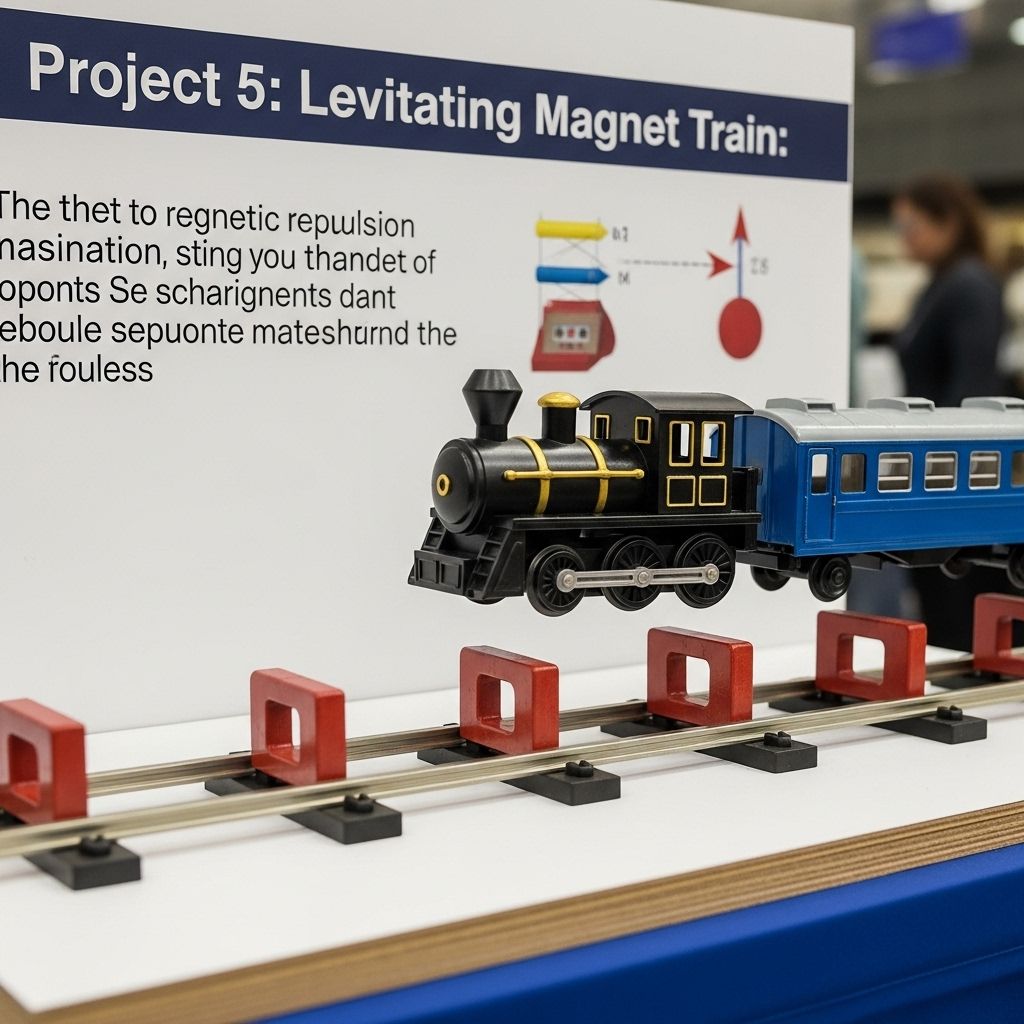
Science fairs offer students a unique platform to explore their scientific interests and showcase their creativity. Whether you are a budding scientist or just looking for a fun project, the following ideas promise to ignite your imagination while providing an educational experience. Here, we present ten unconventional yet fascinating science fair projects that stand out due to their originality and scientific merit.
Science fairs offer a unique opportunity for students to explore their creativity while diving into the world of science. From innovative experiments to eye-catching displays, the right project can capture attention and inspire curiosity. Here are ten insanely creative science fair projects that can set participants apart, including ways to visualize your 3D logo concepts for striking presentations: visualize your 3D logo concepts.
Table of Contents
1. Biodegradable Plastics from Food Waste
As environmental concerns mount, creating biodegradable plastics from food waste not only addresses waste management but also explores alternatives to conventional plastics.
Materials Needed:
- Food waste (banana peels, potato skins, etc.)
- Gelatin or agar-agar
- Water
- Blender
- Mold
Procedure:
- Collect food waste and blend it with water to create a slurry.
- Mix the slurry with gelatin or agar-agar in a pot.
- Heat the mixture until fully dissolved, then pour it into molds.
- Let the mixture cool and solidify.
- Test the biodegradability of your product by burying it in soil and observing its decomposition over time.
2. Solar-Powered Water Purifier
Harnessing solar energy to purify water is a brilliant project that demonstrates renewable energy applications. This project will not only educate about the importance of clean water but also showcase practical uses for solar technology.
Materials Needed:
- Plastic bottle
- Clear plastic wrap
- Small cup or container
- Small stones and sand
- Sunlight
Steps to Follow:
- Fill the larger bottle with dirty water.
- Place a small cup inside the bottle to collect the purified water.
- Cover the opening with plastic wrap, sealing it tightly.
- Place the setup under direct sunlight.
- Observe condensation forming on the plastic wrap, which then drips into the cup, providing clean water.
3. Building a Simple Robot
Creating a basic robot can be a fun and engaging way to learn about engineering and programming. This project can range from simple to complex, depending on your skill level.
Materials Needed:
- Arduino or Raspberry Pi
- Small motors
- Wheels
- Chassis (cardboard or a pre-made kit)
- Battery pack
- Cables
Steps:
- Assemble the chassis.
- Attach the motors and wheels.
- Connect the Arduino or Raspberry Pi to the motors and power supply.
- Program your robot using simple coding languages like Python or C++.
- Test your robot and modify its programming for improved functionality.
4. Investigating the Effect of Music on Plant Growth
This intriguing project combines botany and psychology, allowing students to study how different genres of music affect plant growth.
Materials Needed:
- Seeds (e.g., beans or peas)
- Soil
- Planters
- Music player
- Measuring tape
Steps to Conduct:
- Plant seeds in identical conditions across multiple planters.
- Expose some planters to different types of music (classical, rock, silence).
- Water and care for the plants regularly.
- Measure and record growth over several days or weeks.
- Analyze which music genre promoted the most growth.
5. Creating a Homemade pH Indicator
This project involves using natural substances to create a pH indicator, which can be a hands-on way to learn about acidity and alkalinity.
Materials Needed:
- Red cabbage
- Water
- Different household liquids (vinegar, baking soda solution, etc.)
- Containers
Process:
- Chop the cabbage and boil it in water to extract the color.
- Separate the liquid into containers.
- Add different household liquids to each container of cabbage water.
- Observe the color change indicating pH levels.
6. The Science of Crystals
Growing crystals can be a mesmerizing way to understand the science behind crystallization and chemical reactions.
Materials Needed:
- Table salt or sugar
- Water
- Glass jar
- Stirring stick
- String and pencil
Steps:
- Dissolve salt or sugar in hot water until no more will dissolve.
- Pour the solution into a glass jar and suspend a string tied to a pencil over the jar.
- Let the jar sit undisturbed for several days.
- Observe the growth of crystals on the string.
7. Exploring Magnetism with Homemade Magnetic Slime
This project combines chemistry and physics and will fascinate anyone interested in magnetism.
Materials Needed:
- White school glue
- Liquid starch
- Iron filings
- Magnet
Procedure:
- Mix white glue with liquid starch to create slime.
- Add iron filings to the mixture and knead until well combined.
- Test the slime with a magnet and observe its magnetic properties.
8. The Power of Wind: Homemade Wind Turbine
Creating a model wind turbine allows students to explore renewable energy sources and understand mechanical engineering principles.
Materials Needed:
- Cardboard
- Plastic bottle
- DC motor
- LED light
- Wires
Steps:
- Construct the turbine blades from cardboard attached to a bottle.
- Install the DC motor at the center and connect the LED light.
- Place the turbine in a windy area and observe how wind spins the blades and powers the light.
9. Investigating the Effects of Temperature on Battery Life
This project explores how temperature affects the efficiency and life cycle of batteries, relevant for both consumers and environmentalists.
Materials Needed:
- Battery (AA or AAA)
- Thermometer
- Timer
- Light bulb or small electronic device
- Ice, water, and heat sources
Methodology:
- Test battery life at room temperature.
- Repeat tests in cold (ice water) and hot conditions.
- Record the time taken for the battery to die in each scenario.
- Analyze data to conclude how temperature affects performance.
10. The Chemistry of Baking Soda and Vinegar Rockets
This project provides a fun visualization of chemical reactions while engaging with principles of physics, particularly thrust and propulsion.
Materials Needed:
- Empty plastic bottle
- Baking soda
- Vinegar
- Paper towel
- Safety goggles
Steps:
- Fill a bottle partially with vinegar.
- Wrap baking soda in paper towel and quickly place it into the bottle.
- Seal the bottle and step back.
- Observe the chemical reaction and the rocket’s launch.
By exploring these innovative science fair projects, students can enhance their understanding of scientific principles while developing their problem-solving and critical thinking skills. Each project emphasizes creativity, environmental awareness, and the integration of technology in modern scientific exploration.
FAQ
What are some unique science fair project ideas?
Consider projects like creating a homemade volcano with edible materials, testing the pH levels of different liquids, or building a solar oven to cook s’mores.
How can I stand out at the science fair?
Incorporate interactive elements, use eye-catching visuals, and present your findings in an engaging way to captivate the judges.
What materials are needed for a creative science fair project?
Common materials include household items, craft supplies, and basic science tools like beakers, measuring cups, and thermometers.
How do I choose the right science fair project for my grade level?
Consider your interests, the complexity of the project, and the resources available to you. Choose a topic that challenges you but is achievable.
What are some tips for presenting my science fair project?
Practice your presentation multiple times, prepare answers for potential questions, and use visual aids to enhance your explanation.
Can I use technology in my science fair project?
Absolutely! Incorporating technology like coding, robotics, or digital data collection can elevate your project and demonstrate innovative thinking.