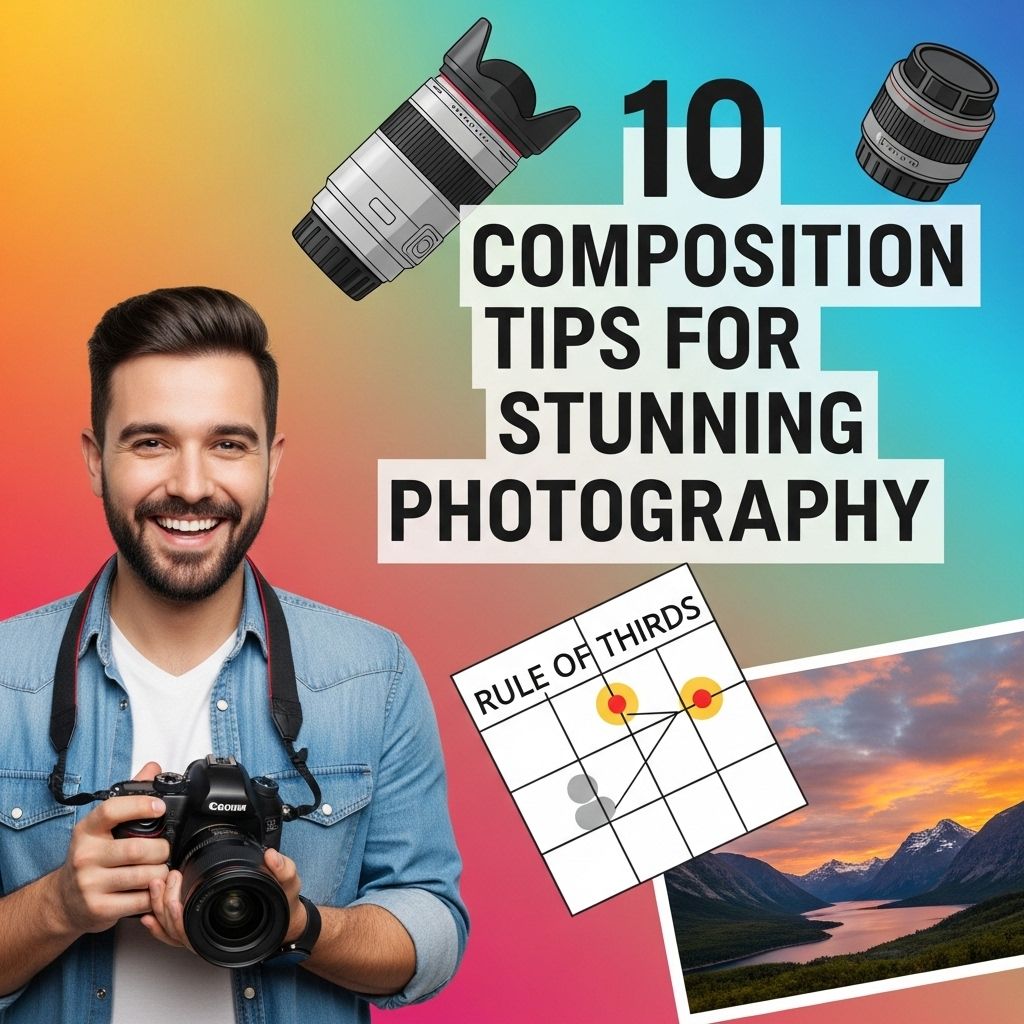
10 Composition Tips for Stunning Photography
Discover 10 essential composition tips to elevate your photography and create stunning images that capture attention.

Photography is a captivating art form that allows individuals to express emotions, tell stories, and capture fleeting moments in time. However, creating stunning photographs requires more than just pointing and shooting a camera. Understanding composition is vital, as it serves as the framework for every stunning image. In this article, we will delve into 10 essential composition tips that can elevate your photography to new heights.
Capturing stunning photography goes beyond just clicking the shutter; it requires a keen eye for composition. By mastering a few essential techniques, you can elevate your images to tell compelling stories that resonate with viewers. To enhance your visual creativity, explore resources like learn how to use logo mockups effectively for design inspiration.
Table of Contents
Understanding the Basics of Composition
Before diving into specific tips, it’s crucial to grasp what composition in photography entails. Composition refers to the arrangement of visual elements within the frame. Good composition draws the viewer’s eye to the subject and creates a sense of balance and harmony within the photograph.
The Rule of Thirds
One of the most fundamental principles of composition is the Rule of Thirds. This technique involves dividing your frame into nine equal sections by two vertical and two horizontal lines. By placing the key elements of your scene along these lines or at their intersections, you can create a more balanced and engaging image.

Leading Lines
Leading lines are natural lines within an image that lead the viewer’s eye toward the main subject. These lines can be roads, paths, rivers, or even architectural features. Incorporating leading lines helps to create depth and perspective in your photographs.
Creating Depth and Dimension
Adding depth to your images can make them feel more three-dimensional and engaging. Here are a few techniques to consider:
- Foreground Interest: Include elements in the foreground to draw the viewer’s eye into the scene.
- Layering: Create layers within your composition to enhance depth, such as framing your subject with trees or buildings.
- Use of Shadows: Shadows can define shapes and create contrast, adding more dimension to your image.
Framing Your Subject
Framing involves using elements in the scene to create a ‘frame’ around your subject. This technique can enhance the focus on the main subject while adding an artistic layer to the photograph. Examples of framing elements include doorways, windows, and overhanging branches.
Balancing Your Composition
Balance is crucial in photography. A well-balanced composition makes an image feel stable and visually appealing. There are two types of balance to consider:
Symmetrical Balance
Symmetrical balance occurs when elements on both sides of the image mirror each other. This is a classic approach that can create a sense of harmony and order.
Asymmetrical Balance
Asymmetrical balance involves placing different visual weights in a way that still feels balanced. This can create a dynamic feel to your images while maintaining visual appeal.
Color and Contrast
Color plays an integral role in photography composition. The right color palette can evoke emotions and set the mood for your images.
Using Complementary Colors
Complementary colors are opposite each other on the color wheel and can create striking visuals when placed together. Consider the following combinations:
| Color 1 | Color 2 |
|---|---|
| Blue | Orange |
| Red | Green |
| Yellow | Purple |
Contrast to Create Impact
High contrast images can be powerful and striking. Consider using contrasting colors, light and shadow, or textures to create impact.
Experimenting with Perspectives
Altering your perspective can yield fresh and intriguing compositions. Here are some approaches to try:
- Change your vantage point by getting low to the ground or shooting from a higher position.
- Use a wide-angle lens to distort perspective, making foreground elements appear larger.
- Explore reflections in water or glass for unique compositions.
Post-Processing for Final Touches
Post-processing is an essential part of modern photography. Utilizing software like Adobe Lightroom or Photoshop can enhance your composition. Here are some areas you can focus on during editing:
- Cropping: Crop your images to improve composition and remove distractions.
- Adjusting Exposure: Correct exposure issues to ensure your subject stands out.
- Enhancing Colors: Boost colors and contrast for a more dramatic effect.
Practicing Your Skills
Lastly, the best way to improve your composition skills is through practice. Make it a habit to shoot regularly, experiment with different techniques, and analyze your images critically.
In conclusion, mastering composition is essential for any photographer looking to create stunning images. By employing these 10 tips, you can enhance your photographic artistry and develop a unique style that showcases your vision. Remember, photography is not just about capturing a moment; it’s about how you capture the essence of that moment through composition.
FAQ
What are the essential composition tips for stunning photography?
Some essential composition tips include the rule of thirds, leading lines, framing, symmetry, and using negative space to create a balanced image.
How does the rule of thirds improve my photography?
The rule of thirds helps create more dynamic and interesting compositions by dividing the frame into a 3×3 grid and placing key elements along the intersecting lines or at their intersections.
What is the significance of leading lines in photography?
Leading lines draw the viewer’s eye into the photograph and guide them to the focal point, creating a sense of depth and perspective.
How can I use framing to enhance my photos?
Framing involves using elements within the scene, such as trees or windows, to create a ‘frame within a frame,’ which adds depth and context to your composition.
What role does negative space play in photography composition?
Negative space refers to the area surrounding the main subject, and it can emphasize the subject, create a minimalist look, and enhance the overall impact of the photograph.
How can symmetry be effectively used in photography?
Symmetry can create visually striking images by balancing elements on either side of the frame, leading to a sense of harmony and order in the composition.