Choosing the Right Sensors for Robotics Success
Discover essential tips for selecting the best sensors for your robotics projects, ensuring optimal performance and functionality.
In the rapidly evolving world of robotics, the choice of sensors can significantly impact the performance and functionality of robotic systems. Sensors serve as the sensory organs of robots, enabling them to perceive their environment, make decisions, and perform tasks effectively. When selecting sensors for robotics applications, engineers and developers must consider a variety of factors to ensure optimal performance. This article delves into the key considerations for choosing sensors in robotics, exploring the different types of sensors available, their applications, and the criteria that should guide your selection process.
Selecting the appropriate sensors is crucial for achieving success in robotics, as they significantly impact the robot’s ability to perceive and interact with its environment. Understanding the specific requirements of your project will help you make informed choices that enhance functionality and performance. For inspiration on design elements, discover unique 3D logo examples.
Understanding Sensor Types
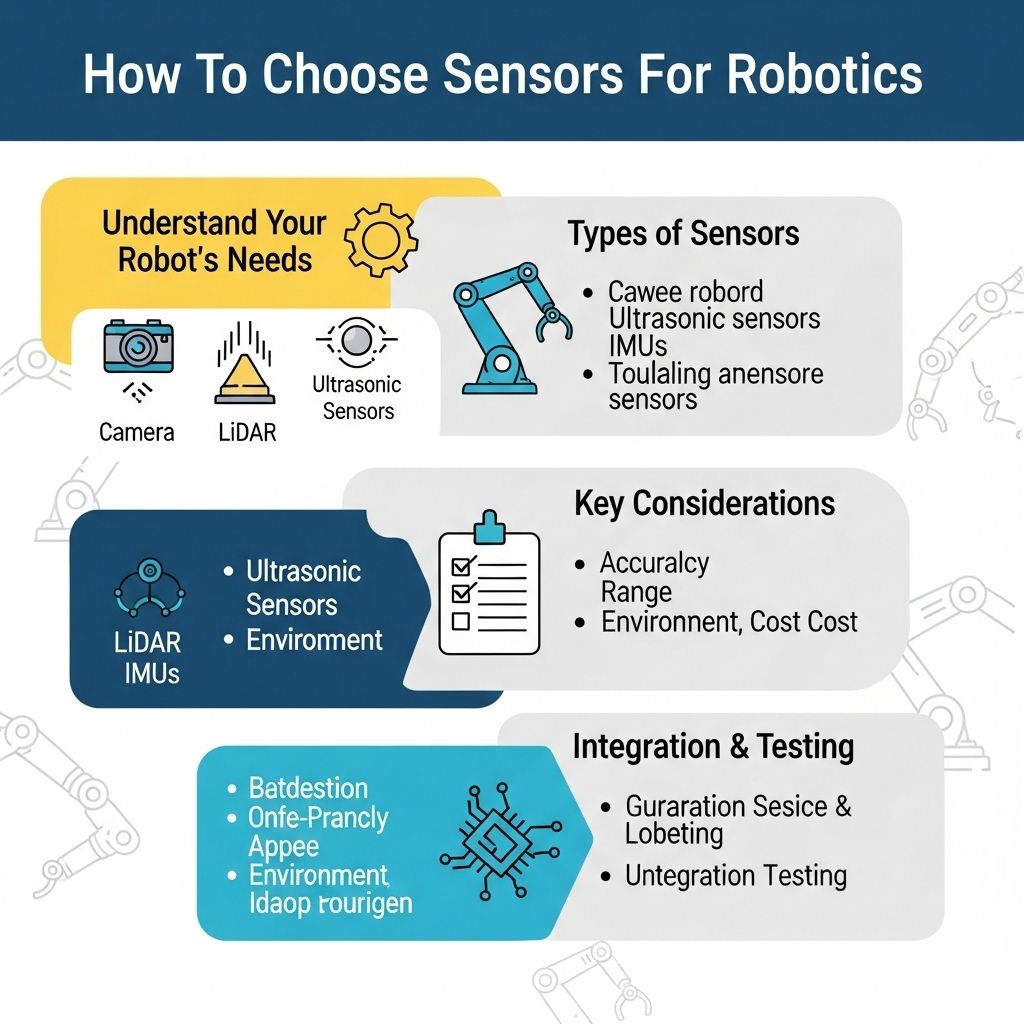
Before diving into the selection process, it’s essential to understand the various types of sensors commonly used in robotics. Each type serves a unique purpose and provides different forms of information.
1. Proximity Sensors
Proximity sensors detect the presence or absence of an object within a certain range. Commonly used types include:
- Ultrasonic Sensors: Utilize sound waves to detect objects.
- Infrared Sensors: Use infrared light to sense nearby objects.
- Capacitive Sensors: Detect changes in capacitance caused by nearby objects.
2. Vision Sensors
Vision sensors enable robots to perceive their surroundings through cameras and image processing techniques. Key categories include:
- RGB Cameras: Capture color images for various applications.
- Depth Cameras: Measure distance to objects, providing 3D information.
- Thermal Cameras: Detect heat signatures, useful in certain environments.
3. Inertial Sensors
Inertial sensors are crucial for measuring motion and orientation. The most common types are:
- Accelerometers: Measure acceleration forces.
- Gyroscopes: Measure angular velocity to determine orientation.
- Magnetometers: Measure magnetic fields to assist with navigation.
4. Environmental Sensors
These sensors gather data about environmental conditions. Examples include:
- Temperature Sensors: Measure ambient temperature.
- Humidity Sensors: Evaluate moisture levels in the air.
- Pressure Sensors: Monitor atmospheric pressure, useful in altitude measurement.
Key Considerations for Sensor Selection
Choosing the right sensors involves evaluating several factors that align with the robot’s intended functions. Here are some critical considerations:
1. Application Requirements
Understanding the specific requirements of your application is fundamental. Consider the following:
- What tasks will the robot perform?
- What type of environment will the robot operate in?
- What data is necessary for the robot to complete its functions?
2. Sensor Accuracy and Precision
Different sensors have varying levels of accuracy and precision. Ensure that the sensors you choose meet the accuracy requirements of your application. Consider measuring:
- Resolution: The smallest change a sensor can detect.
- Linearity: How closely the sensor’s output corresponds to the actual measurement.
- Repeatability: The sensor’s ability to provide consistent results across multiple measurements.
3. Response Time
In dynamic environments, the response time of sensors is crucial. A sensor that provides quick feedback allows a robot to react promptly to changes in its surroundings. Consider:
- Sampling Rate: How often the sensor provides data.
- Latency: The delay between the sensor’s detection and data output.
4. Integration with Robotics Systems
Ensure that the selected sensors can be easily integrated with your robotics system, including:
- Communication Protocols: Such as I2C, SPI, UART, or CAN.
- Power Requirements: Confirm compatibility with the robot’s power supply.
- Physical Size and Weight: Ensure sensors fit within the robot’s design constraints.
Evaluating Environmental Considerations
Robots often operate in diverse environments, making it essential to choose sensors that can withstand specific conditions:
1. Temperature and Humidity
Consider the operational temperature range and humidity levels to protect sensors from damage and ensure accuracy. Choose sensors rated for:
- Low-Temperature Environments
- High-Temperature Environments
- High Humidity and Corrosive Conditions
2. Dust and Water Resistance
In environments where dust or moisture may be present, selecting sensors with appropriate ingress protection (IP) ratings is crucial. An IP rating indicates:
- Protection against dust (first digit)
- Protection against water (second digit)
Cost-Effectiveness and Availability
Budgets play a significant role in sensor selection. While advanced sensors may offer enhanced performance, they often come at a higher cost. Consider:
- The total cost of ownership, including maintenance and replacement.
- The availability of the sensors from trusted suppliers.
- The potential for future scalability with the chosen sensors.
Prototyping and Testing
Before finalizing sensor choices, conduct prototyping and testing to validate their performance. Key steps include:
- Mockup Development: Create simple prototypes to evaluate sensor capabilities.
- Field Testing: Deploy robots in real-world scenarios to assess sensor effectiveness.
- Iterative Design: Be prepared to make adjustments based on testing outcomes.
Conclusion
Choosing the right sensors for robotics is a critical step that requires careful consideration of various factors, including application requirements, sensor characteristics, and environmental conditions. By understanding the different types of sensors available and evaluating their performance, engineers can enhance the functionality and reliability of robotic systems. With ongoing advancements in sensor technology, staying informed about the latest trends and innovations will further empower developers to make informed sensor choices that drive the future of robotics.
FAQ
What factors should I consider when choosing sensors for robotics?
When selecting sensors for robotics, consider factors such as the type of environment, the specific application, required accuracy, response time, and the robot’s power supply.
What types of sensors are commonly used in robotics?
Common sensors in robotics include ultrasonic sensors, infrared sensors, lidar, cameras, and IMUs (Inertial Measurement Units), each serving different purposes such as distance measurement, obstacle detection, and navigation.
How do I determine the right sensor for my robotic project?
To determine the right sensor for your robotic project, analyze the tasks your robot will perform, assess environmental conditions, and evaluate compatibility with your robot’s control system.
What is the role of sensor fusion in robotics?
Sensor fusion in robotics combines data from multiple sensors to improve accuracy and reliability, allowing robots to make better decisions based on a comprehensive understanding of their surroundings.
Can I use multiple sensors in a single robotic system?
Yes, using multiple sensors in a single robotic system can enhance functionality, providing redundancy and improving overall performance by leveraging the strengths of different sensor types.