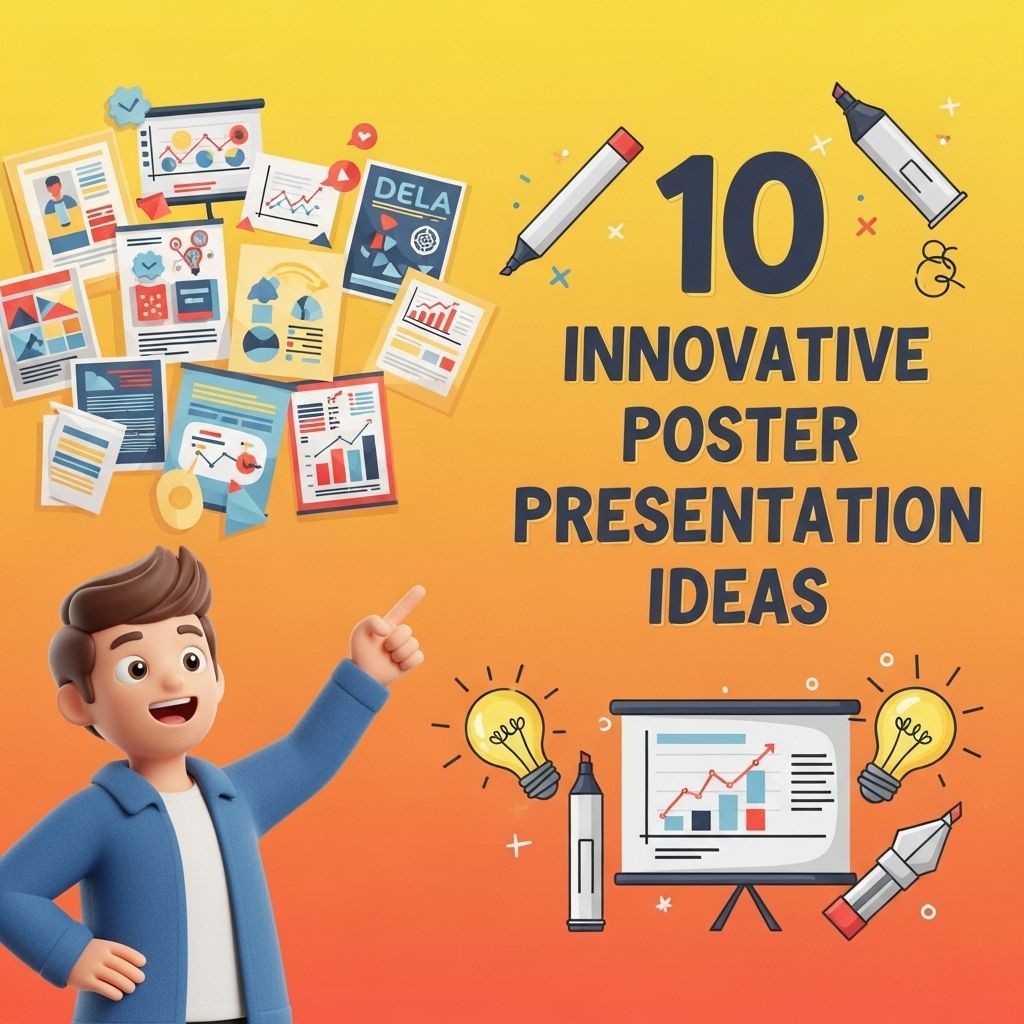
10 Innovative Poster Presentation Ideas to Engage Your Audience
Discover 10 creative poster presentation ideas that will captivate your audience and enhance your communication skills.
In the realm of academia and professional conferences, poster presentations serve as a vital communication tool, allowing researchers and professionals to showcase their work visually. However, with the growing number of presentations at each event, it becomes essential to stand out and engage your audience effectively. This article explores ten innovative poster presentation ideas that can elevate your work and captivate your audience.
Engaging your audience during a poster presentation can be challenging, but innovative ideas can transform your approach. From interactive elements to creative designs, these strategies not only capture attention but also enhance comprehension. For a fresh take on visuals, you might want to explore our logo mockup collection for inspiration.
1. Interactive Elements
One of the most effective ways to engage your audience is by incorporating interactive elements into your poster. Consider the following:
- QR Codes: Link to additional resources, videos, or your research paper.
- Touch Screens: Allow viewers to interactively explore data or simulations.
- Augmented Reality (AR): Use AR apps to bring your poster to life, enabling viewers to see 3D models or animations related to your research.
2. Infographic Style
Transform your poster into an infographic that presents complex information in a visually appealing format. Consider these tips:
- Use bold colors and clear fonts.
- Incorporate charts and graphics to represent data.
- Keep text minimal; focus on visuals and key messages.
3. Thematic Design
Design your poster around a specific theme that relates to your research. For example:
- A nature-themed poster for environmental studies.
- A retro design for historical research.
- A futuristic layout for technology-related topics.
4. Storytelling Approach
Craft your poster to tell a story. Incorporate a narrative that guides viewers through your research journey:
- Start with a hook: Grab attention with a compelling question or statistic.
- Introduce the problem: Clearly outline the research problem.
- Present your findings: Use visuals and bullet points to present data succinctly.
- Conclude with implications: Explain the significance of your findings.
5. Color Psychology
Utilizing color psychology can significantly impact viewer perception. Consider these principles:
- Blue: Conveys trust and professionalism.
- Green: Associated with growth and health.
- Red: Grabs attention but should be used sparingly.
6. Minimalistic Design
A clean and minimalistic design can enhance clarity and focus. Emphasize:
- White space to avoid clutter.
- Simple charts and visuals.
- Concise text that communicates your message without overwhelming the viewer.
7. Visual Hierarchy
Implement a visual hierarchy to guide the viewer’s eye through the poster. Use:
- Different font sizes: Make headlines larger for emphasis.
- Contrast: Use contrasting colors to highlight important data.
- Layout: Organize sections logically to facilitate flow.
8. Data Visualization
Effective data visualization is crucial for presenting complex information succinctly. Consider using:
- Graphs and Charts: Choose the right type for your data (e.g., bar charts for comparisons, line graphs for trends).
- Heat Maps: Ideal for displaying data density or patterns.
- Infographics: Combine various data points into a cohesive visual.
9. Collaborative Posters
Incorporating collaboration can make your presentation more dynamic. Explore:
- Team Projects: Feature multiple researchers’ work on one poster.
- Live Demonstrations: Collaborate with colleagues to demonstrate processes related to your research.
- Feedback Stations: Create areas where viewers can leave comments or questions, facilitating interaction.
10. Sustainable Materials
As sustainability becomes increasingly important, consider using eco-friendly materials for your poster presentation:
- Recycled Paper: Choose sustainable printing options.
- Digital Posters: Share your research online to reduce waste.
- Reusable Displays: Invest in materials that can be reused for multiple presentations.
Conclusion
Innovative poster presentations can significantly enhance your visibility and impact at conferences and academic events. By integrating interactive elements, utilizing effective design principles, and focusing on storytelling, you can captivate your audience and convey your research more effectively. Consider these ten ideas as a foundation for creating a memorable poster presentation that will leave a lasting impression. Remember, the ultimate goal is to communicate your research clearly and engagingly, ensuring that your work resonates with viewers long after they leave your presentation.
FAQ
What are some creative themes for poster presentations?
Some creative themes for poster presentations include ‘The Future of Technology’, ‘Sustainable Practices in Daily Life’, and ‘Innovations in Healthcare’. Each theme can inspire unique visuals and engaging content.
How can I make my poster visually appealing?
To make your poster visually appealing, use a cohesive color scheme, high-quality images, and clear, readable fonts. Incorporate infographics to convey complex data effectively.
What are some effective ways to present my poster?
Effective ways to present your poster include rehearsing your key points, engaging with your audience through questions, and providing handouts that summarize your main ideas.
How can I incorporate technology into my poster presentation?
You can incorporate technology into your poster presentation by using QR codes linked to videos, interactive apps, or websites that provide additional information about your topic.
What are some common mistakes to avoid in poster presentations?
Common mistakes to avoid include overcrowding the poster with text, using too many different fonts, and not practicing your verbal presentation enough to engage with the audience effectively.
How can I tailor my poster presentation for different audiences?
To tailor your poster presentation for different audiences, consider their background knowledge and interests. Use simpler language for general audiences and more technical language for specialized groups.