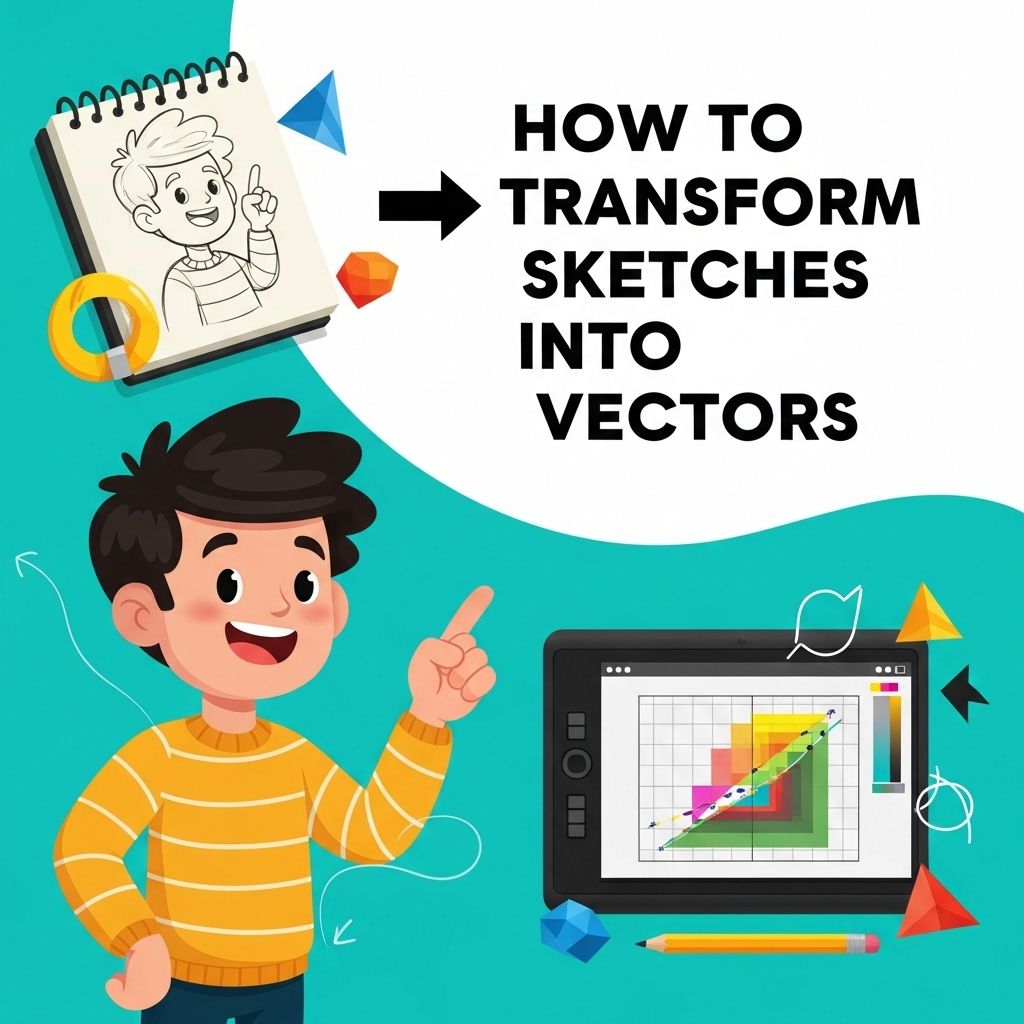
Transform Sketches Into Stunning Vector Logos
Learn how to easily convert your hand-drawn sketches into professional vector logos with these simple techniques and tools.
In the world of design, the transformation of sketches into vector logos has become an essential skill for graphic designers. With the rise of digital media, having a logo that is scalable without losing quality is crucial for brand identity. This article will explore the various methods and tools available to convert hand-drawn sketches into professional vector logos while maintaining their original charm and uniqueness.
Transforming sketches into stunning vector logos is a vital step for any designer aiming to create a professional brand identity. This process not only enhances the visual appeal but also ensures scalability across various mediums. For those looking for quality representations of their designs, check out our premium logo mockups.
Understanding Vector Graphics
Before diving into the process of transforming sketches into vector logos, it’s important to understand what vector graphics are. Unlike raster graphics, which are made up of pixels and can lose quality when resized, vector graphics use mathematical equations to create shapes. This means they can be scaled infinitely without losing clarity.
Key Benefits of Vector Graphics
- Scalability: Resize without quality loss.
- Editability: Easily modify shapes and colors.
- File Size: Generally smaller than raster files.
- Versatility: Suitable for various applications, from business cards to billboards.
Tools Required for the Transformation
Transforming sketches into vector logos can be accomplished using a variety of tools, both software and hardware. Below are the most commonly used:
Software Tools
- Adobe Illustrator: Industry-standard vector graphic design software.
- CorelDRAW: Another powerful tool for vector graphics, preferred by some designers.
- Inkscape: A free and open-source alternative with robust features.
- Affinity Designer: A cost-effective design tool that offers powerful vector capabilities.
Hardware Tools
In addition to software, certain hardware can enhance the process:
- Graphic Tablet: Allows for precise drawing and sketching.
- Scanner: To digitize hand-drawn sketches for further editing.
- High-Resolution Camera: Can be used to capture sketches if a scanner is not available.
The Process of Transforming Sketches
The transformation process can be broken down into several key steps:
Step 1: Create Your Sketch
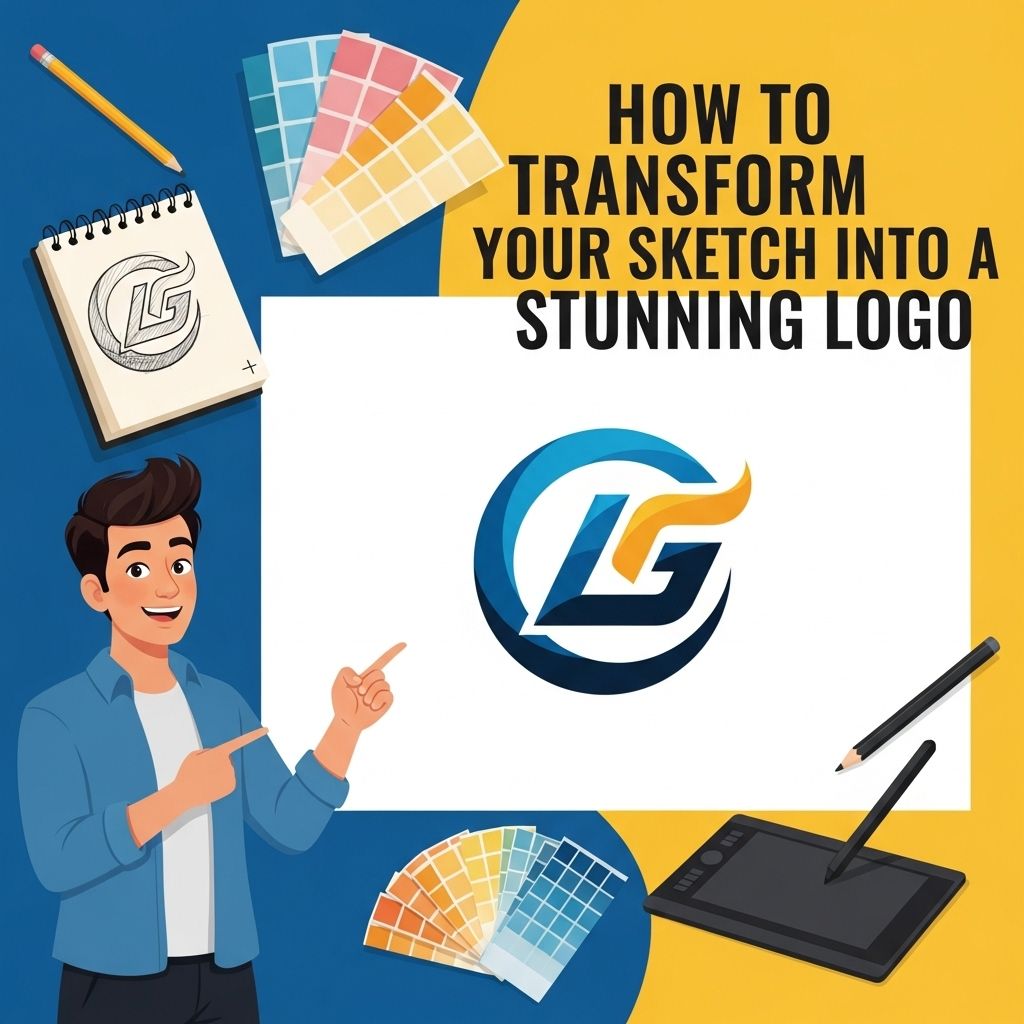
Start by creating a rough sketch of your logo idea. Use pencil and paper or a digital drawing tool. Focus on shapes, lines, and overall composition.
Step 2: Digitize the Sketch
There are two main ways to digitize your sketches:
- Scanning: Use a scanner to create a high-quality image of your sketch.
- Photography: If a scanner isn’t available, use a camera or smartphone, ensuring proper lighting and focus.
Step 3: Import into Vector Software
Once your sketch is digitized, open your vector software and import the image. You may want to adjust the contrast or brightness for better visibility.
Step 4: Trace the Sketch
Using the pen tool or auto-trace feature in your software, begin tracing over your sketch. Follow these guidelines:
- Keep your paths simple and avoid overly complex shapes.
- Adjust anchor points to create smooth curves.
- Pay attention to line weight, ensuring consistency.
Step 5: Add Color and Details
After tracing, add color to your logo. Consider the following:
- Use a color palette that aligns with the brand identity.
- Experiment with gradients and textures for depth.
- Maintain a balance between simplicity and visual interest.
Step 6: Export Your Logo
Once you’re satisfied with your design, export your logo in various formats, including:
| Format | Use Case |
|---|---|
| SVG | Web graphics, scalable use |
| Print media, high quality | |
| EPS | Professional printing |
Tips for Effective Logo Design
To ensure your final logo design is effective and impactful, keep these tips in mind:
- Know Your Audience: Understand who your target customers are and design accordingly.
- Keep It Simple: The best logos are often the simplest. Avoid clutter.
- Be Timeless: Aim for designs that won’t quickly go out of style.
- Seek Feedback: Share your designs with others for constructive criticism.
Common Mistakes to Avoid
While designing logos, keep an eye out for these common pitfalls:
- Overcomplicating the design with too many elements.
- Using too many colors, which can dilute the brand message.
- Neglecting scalability, resulting in poor-quality outputs at different sizes.
Final Thoughts
Transforming sketches into vector logos is a rewarding process that allows designers to blend creativity with technical skills. By understanding vector graphics and utilizing the right tools, you can create a logo that not only captures the essence of a brand but also stands out in today’s competitive market. Whether you’re a seasoned designer or just starting, mastering this transformation is invaluable in your design toolkit.
With practice, patience, and an eye for detail, your hand-drawn sketches can evolve into stunning vector logos that effectively represent your brand or any project you take on.
FAQ
What is the process of converting sketches into vector logos?
The process typically involves scanning or photographing your sketch, importing it into vector graphic software like Adobe Illustrator, and then using tools such as the Pen Tool or Image Trace to create a scalable vector representation.
Why should I convert my sketches into vector logos?
Vector logos are resolution-independent, meaning they can be resized without losing quality, making them ideal for various applications such as print, web, and merchandise.
What software is best for transforming sketches into vector logos?
Adobe Illustrator is the most popular choice, but other software like CorelDRAW, Inkscape, or Affinity Designer can also effectively create vector logos from sketches.
Can I create a vector logo from a hand-drawn sketch?
Yes, hand-drawn sketches can be converted to vector logos by scanning them and using vector software to trace and refine the design.
Is it necessary to have graphic design skills to convert sketches into vector logos?
While basic graphic design skills can be helpful, many software programs offer tutorials and guides to assist beginners in transforming sketches into professional-quality vector logos.
What are the common mistakes to avoid when converting sketches into vector logos?
Common mistakes include not simplifying the design enough, neglecting to use layers effectively, and overlooking the importance of color and typography in the final logo.