Top 5 Essential Tools Every Designer Needs in 2025
Discover the 5 must-have tools that every designer should utilize in 2025 for enhanced creativity and productivity.
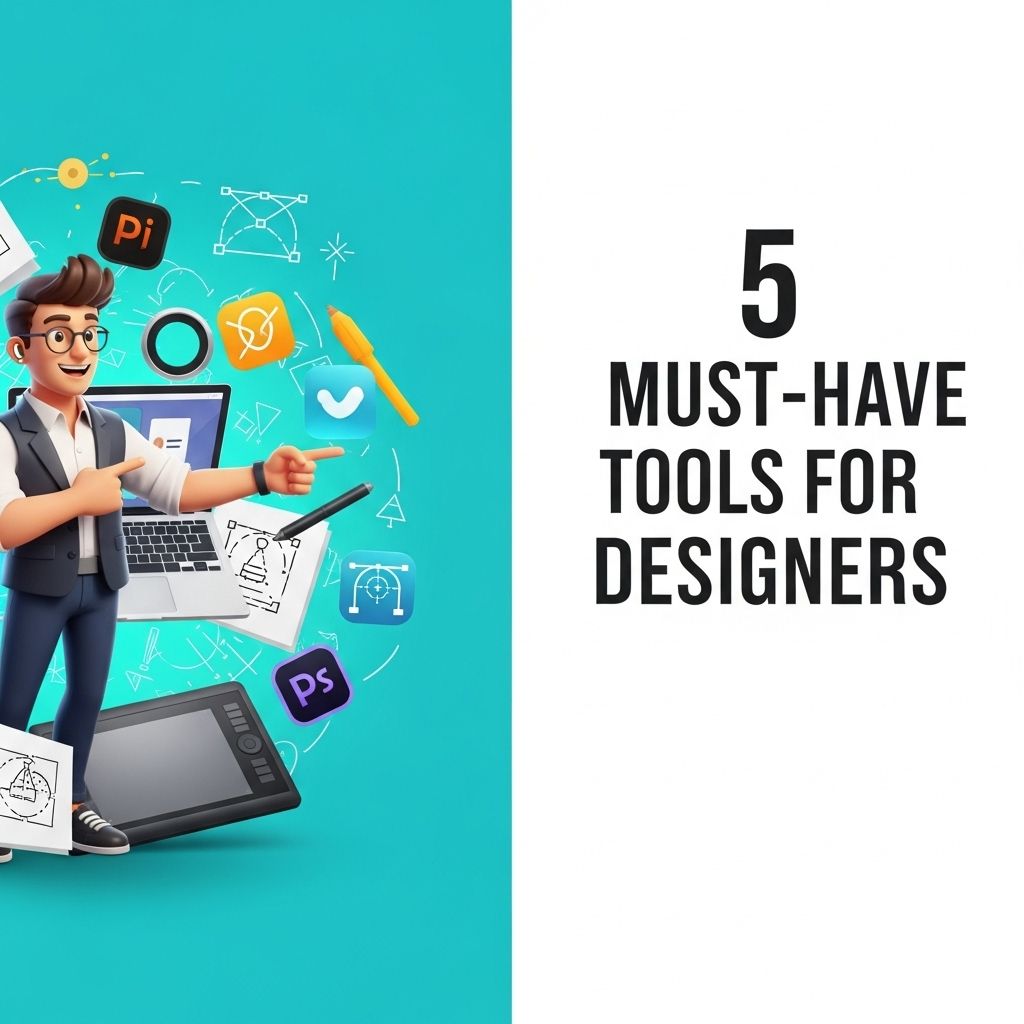
As the design landscape continues to evolve, staying ahead of the game requires more than just creativity; it demands the right tools. In 2025, designers face a myriad of challenges, from collaborating remotely with teams to keeping up with rapid technological advancements. This article highlights five essential tools that will not only streamline your design process but also enhance your overall efficiency and creativity.
As the design landscape continues to evolve in 2025, having the right tools can significantly enhance a designer’s workflow and creativity. From streamlined mockup generation to innovative collaboration platforms, the essential tools of this year enable designers to bring their visions to life more efficiently. For those focusing on logo design, consider exploring resources to browse logo mockup templates that can elevate your presentations.
1. Figma: The Collaborative Design Platform
Figma has emerged as a leader in design collaboration. As a web-based interface design tool, it allows designers to work simultaneously on projects, making it ideal for teams spread across different locations.
Key Features:
- Real-time collaboration
- Version control
- Plugins for various functionalities
- Design systems management
Figma’s unique features, such as component systems and auto-layout, allow for the creation of responsive designs that adapt seamlessly to various screen sizes. For teams that rely on feedback, the comment feature enables stakeholders to leave input directly on prototypes.
2. Adobe Creative Cloud: The Suite of Essentials
No designer’s toolkit is complete without Adobe Creative Cloud. In 2025, the suite continues to be indispensable for a variety of design tasks, from graphic design and video editing to web development.
Components of Adobe Creative Cloud:
| Application | Use Case |
|---|---|
| Photoshop | Image editing and manipulation |
| Illustrator | Vector graphics design |
| Adobe XD | UI/UX design and prototyping |
| After Effects | Motion graphics and visual effects |
The integration between these applications allows for a smooth workflow. For instance, designs created in Illustrator can be imported directly into Photoshop for further editing, saving valuable time.
3. Sketch: Vector Graphics and UI Design
While Figma has gained popularity for collaboration, Sketch remains a powerful tool for vector graphics. It’s particularly favored among UI and UX designers for its ease of use and robust features.
Advantages of Using Sketch:
- Intuitive interface
- Symbols and styles for consistent design
- Easy integration with third-party plugins
Sketch’s focus on vector graphics enables designers to create high-quality visuals that can be easily scaled. Its component system allows for rapid design iterations, making it a favorite among agile teams.
4. Webflow: Designing for the Future of Development
With the increasing importance of web design and development, Webflow stands out as a game-changer. This tool allows designers to build responsive websites without needing extensive coding knowledge.
Why Webflow Stands Out:
- Visual development platform
- CMS capabilities
- SEO-friendly designs
- Hosting solutions
Webflow seamlessly integrates the design and development processes, making it easier for designers to prototype and iterate designs before launching live websites. It empowers designers to have full control over the entire web development process.
5. Notion: For Organizational Mastery
While Notion may not be a traditional design tool, its organizational capabilities make it indispensable for designers. The ability to manage projects, collaborate with teams, and store resources in one place can significantly enhance productivity.
Features That Benefit Designers:
- Customizable templates
- Integrated databases
- Collaborative notes and documents
- Task management tools
Notion enables designers to keep track of their projects, set deadlines, and share ideas with team members. Its flexibility allows users to create a tailored workspace that suits their individual needs.
Conclusion: Empowering Your Design Process
As we look towards the future of design in 2025, the tools you choose will play a pivotal role in your success. By integrating Figma, Adobe Creative Cloud, Sketch, Webflow, and Notion into your workflow, you can harness the power of technology to create stunning visuals, collaborate effectively, and manage projects seamlessly.
With these essential tools at your disposal, you can not only keep pace with industry expectations but also push the boundaries of your creativity and efficiency. Embrace the future of design by leveraging these must-have tools and watch your creative potential flourish.
FAQ
What are the top design tools for 2025?
The top design tools for 2025 include Figma for collaborative design, Adobe Creative Cloud for comprehensive creative solutions, Sketch for UI/UX design, Canva for quick graphics, and Procreate for digital illustration.
How can Figma improve my design workflow?
Figma enhances your design workflow by facilitating real-time collaboration, allowing multiple team members to work on the same project simultaneously, and providing cloud-based accessibility.
Is Adobe Creative Cloud worth the investment for designers?
Yes, Adobe Creative Cloud is worth the investment for designers because it offers a vast array of industry-standard tools and resources, making it easier to create high-quality designs efficiently.
What features make Sketch ideal for UI/UX design?
Sketch is ideal for UI/UX design due to its vector editing capabilities, symbols for reusable components, and plugins that extend functionality for prototyping and collaboration.
Can Canva be used for professional design projects?
Absolutely, Canva can be used for professional design projects, especially for creating social media graphics, marketing materials, and presentations quickly and easily, even for those without extensive design experience.
What advantages does Procreate offer for digital artists?
Procreate offers numerous advantages for digital artists, including an intuitive interface, a wide range of brushes, and powerful layering options, making it a favorite for both beginners and professionals.