10 Cold Email Templates That Convert Fast
Discover 10 powerful cold email templates designed to boost your conversion rates and engage your prospects effectively.
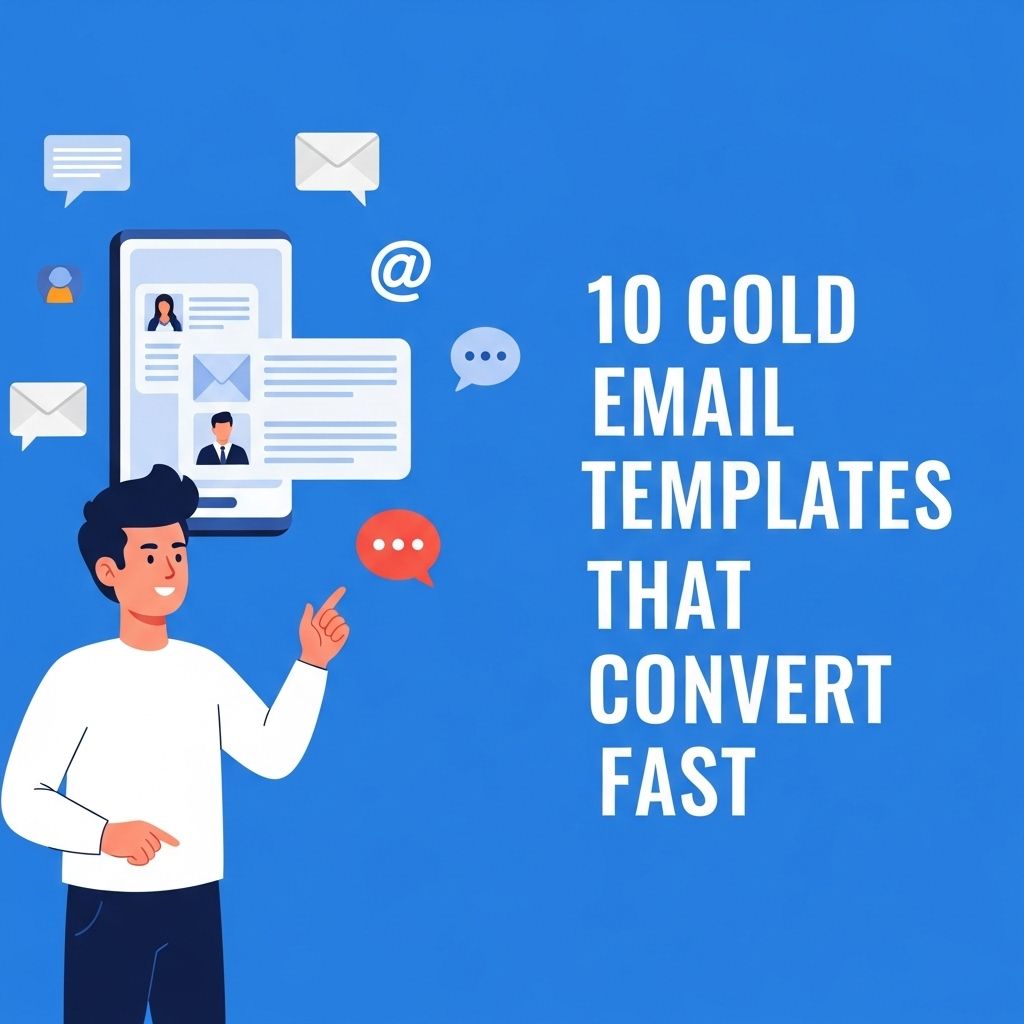
In the fast-paced world of digital marketing, mastering the art of cold emailing can significantly elevate your outreach efforts. Cold emails, when crafted effectively, have the power to establish connections, generate leads, and drive conversions. However, with inboxes bombarded with generic pitches, standing out is crucial. This article offers a comprehensive guide to ten proven cold email templates that can help you achieve higher conversion rates. We’ll break down each template, explaining its purpose, structure, and when to use it.
Cold emailing can be a game changer for your outreach strategy, but crafting the perfect message is crucial. In this guide, we present 10 cold email templates that are designed to convert quickly and effectively. Plus, if you’re looking to enhance your brand presentation, download stunning logo mockups to give your emails a polished look.
Understanding Cold Emailing
Before diving into the templates, it’s important to understand what cold emailing involves. Cold emailing is a method of reaching out to recipients who have had no prior contact with you or your business. The goal is to create interest and prompt a response. Successful cold emails should be:
- Personalized
- Concise
- Value-driven
- Action-oriented
Template 1: The Introductory Email
This template is suited for establishing initial contact. It’s straightforward and focuses on introducing yourself and your intentions.
Structure:
- Subject Line: Keep it engaging (e.g., “Quick Introduction”)
- Salutation: Use their name
- Introduction: Briefly introduce yourself
- Value Proposition: What can you offer?
- Call to Action: Propose a meeting or call
Example:
Subject: Quick Introduction
Hi [Name],
I hope this message finds you well. My name is [Your Name], and I am [Your Position] at [Your Company]. We specialize in [Your Specialty]. I believe there is potential for us to collaborate and create value together. Would you be open to a quick call next week to discuss this?
Template 2: The Value-Add Email
This template focuses on providing value upfront to capture the recipient’s interest.
Structure:
- Subject Line: Offer insight (e.g., “Free Guide on [Topic]”)
- Salutation
- Value Proposition: Share a useful resource
- Context: Explain why you’re reaching out
- Call to Action: Invite feedback or further discussion
Example:
Subject: Free Guide on Boosting Your Marketing ROI
Hi [Name],
As someone deeply involved in [Industry], I thought you might find our latest guide on boosting marketing ROI useful. It offers actionable insights that can help drive measurable results. I’d love to hear your thoughts on it!
Template 3: The Follow-Up Email
Following up on a previous conversation or email can help keep the momentum going.
Structure:
- Subject Line: Reference the previous interaction
- Salutation
- Recap: Briefly summarize previous conversation
- Update: Share any new information or developments
- Call to Action: Ask for a response or input
Example:
Subject: Following Up on Our Last Discussion
Hi [Name],
I wanted to follow up on our last conversation regarding [Topic]. Since then, we have made some exciting progress, and I believe it could be beneficial for you to take a look. Can we schedule a time to discuss this further?
Template 4: The Referral Email
Using referrals can enhance credibility and increase the chances of a positive response.
Structure:
- Subject Line: Mention the referrer
- Salutation
- Introduction: State your connection
- Value Proposition: Why you’re reaching out
- Call to Action: Suggest a meeting or call
Example:
Subject: [Referrer’s Name] Suggested I Reach Out
Hi [Name],
I was speaking with [Referrer’s Name], and they suggested I connect with you regarding [Topic]. I believe we could explore some exciting opportunities together. Would you be open to a quick chat?
Template 5: The Event Invitation Email
If you’re hosting an event, use this template to invite potential clients or partners.
Structure:
- Subject Line: Highlight the event
- Salutation
- Event Details: Date, time, and place
- Value Proposition: Why they should attend
- Call to Action: RSVP request
Example:
Subject: Invitation to Our Upcoming Webinar
Hi [Name],
We’re excited to invite you to our upcoming webinar on [Date] at [Time]. This session will cover [Topic] and provide valuable insights into [Benefit]. Please let us know if you can join us!
Template 6: The Problem-Solution Email
Focus on a specific pain point your recipient may have and present your solution.
Structure:
- Subject Line: Identify the problem
- Salutation
- Problem Statement: Acknowledge the challenge
- Solution: Provide your product/service as a solution
- Call to Action: Suggest a meeting to discuss
Example:
Subject: Struggling with [Problem]?
Hi [Name],
I understand that [Problem] can be a significant challenge. Our solution at [Your Company] has helped many businesses like yours streamline their processes. Let’s discuss how we can help you.
Template 7: The Personalized Approach
This template emphasizes personalized outreach based on the recipient’s background.
Structure:
- Subject Line: Reference a personal interest
- Salutation
- Personal Touch: Mention a common interest
- Value Proposition: Link your offering to their interest
- Call to Action: Invite for a chat
Example:
Subject: Loved Your Recent Article on [Topic]
Hi [Name],
I recently read your article on [Website/Platform], and I appreciated your insights on [Specific Point]. At [Your Company], we’re working on something that aligns perfectly with that. Can we have a chat about it?
Template 8: The Case Study Email
Showcase your success by referencing a compelling case study relevant to their industry.
Structure:
- Subject Line: Highlight results
- Salutation
- Context: Introduce the case study
- Results: Share key metrics or outcomes
- Call to Action: Propose a follow-up discussion
Example:
Subject: See How We Helped [Client] Achieve [Result]
Hi [Name],
I wanted to share a case study on how we assisted [Client] in achieving a [specific result]. The strategies we used could be applicable to your business as well. Would you be open to discussing this in more detail?
Template 9: The Reminder Email
This is useful for reminding a recipient about an upcoming deadline or event.
Structure:
- Subject Line: Reminder on [Topic]
- Salutation
- Context: State the event/deadline
- Importance: Highlight why it matters
- Call to Action: Encourage a response
Example:
Subject: Reminder: Upcoming Deadline for [Event]
Hi [Name],
I wanted to remind you that the deadline for [event or opportunity] is approaching on [date]. It’s a great chance to [benefit of taking action]. Let me know if you have any questions!
Template 10: The Feedback Request Email
Requesting feedback can foster engagement and encourage dialogue.
Structure:
- Subject Line: Request for your insights
- Salutation
- Context: Explain what you need feedback on
- Importance: Why their input is valuable
- Call to Action: Ask for a response
Example:
Subject: Your Thoughts on [Topic] Would Be Valuable
Hi [Name],
I’m reaching out to gather insights on [specific topic]. Your expertise in [their field] would be incredibly valuable to our research. Would you mind sharing your thoughts on this?
Conclusion
Crafting effective cold emails requires a mix of strategy, personalization, and clarity. By utilizing these templates, you can enhance your outreach and drive higher conversion rates. Remember, the key to successful cold emailing is to always focus on the recipient’s needs while presenting your value proposition clearly. Happy emailing!
FAQ
What is a cold email?
A cold email is an unsolicited email sent to a recipient without prior contact, often used for sales, networking, or outreach purposes.
How do cold email templates improve conversion rates?
Cold email templates provide a structured approach, saving time and ensuring that essential elements are included to engage the recipient and increase the likelihood of a positive response.
What key elements should be included in a cold email?
A cold email should include a catchy subject line, a personalized greeting, a clear value proposition, a call to action, and a professional closing.
How can I personalize my cold email templates?
You can personalize your cold email templates by addressing the recipient by name, referencing their company or recent achievements, and tailoring the content to their specific needs or interests.
What are some common mistakes to avoid in cold emailing?
Common mistakes include sending generic messages, lacking a clear call to action, being overly salesy, and failing to follow up after the initial email.
How often should I follow up after sending a cold email?
It’s generally recommended to follow up 3-5 days after the initial email, and then again a week later if you haven’t received a response, while keeping your follow-up messages polite and concise.